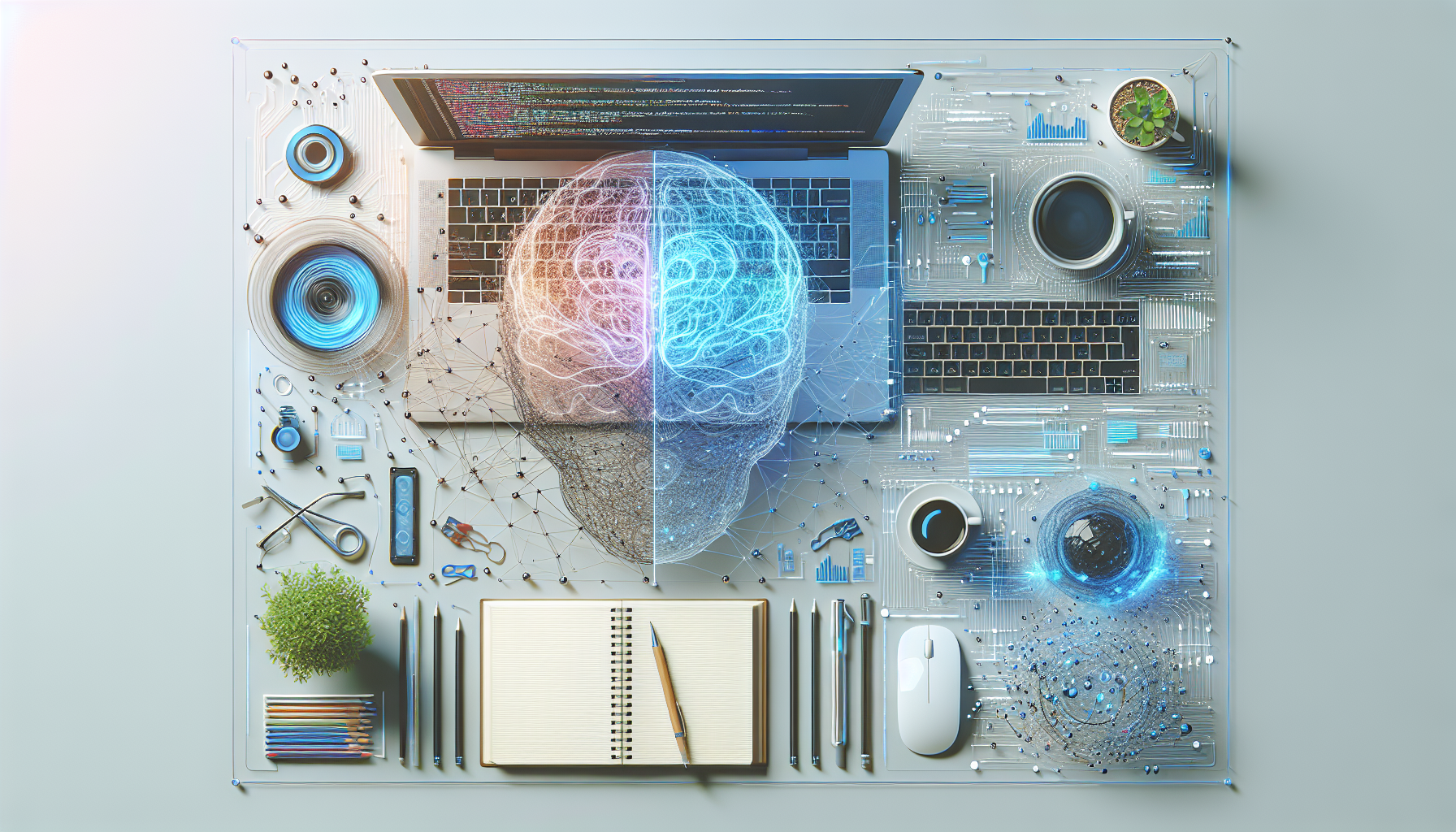
Picture this: a bustling tech company where programmers and artificial intelligence (AI) systems work side by side, creating innovative solutions faster than ever before. While some predict the obsolescence of human programmers, the reality is far more nuanced. AI is a transformative force, but it won’t replace the human touch in programming.
The fear that AI will render programmers redundant looms over many in the tech industry. Yet, the truth is that AI amplifies human creativity rather than diminishes it. This symbiotic relationship is reshaping the landscape of software development in unexpected ways.
Prepare to dive into a world where AI not only coexists with programmers but also revolutionizes how we approach challenges. From automating repetitive tasks to unlocking new realms of creativity, AI is set to be an indispensable ally in the programmer’s toolkit.
In this article: Why AI won’t replace programmers · The human element in coding · AI as a tool for programmers · The shift in programming work dynamics
The Indispensable Human Element
AI lacks the unique human qualities of creativity and intuition that are central to programming. Writing effective code is not just a technical task; it involves understanding complex problems, innovating solutions, and tailoring experiences to human needs. The human programmer’s role goes beyond syntax; it involves empathy, abstract thinking, and cultural awareness.
Programming is an art that demands human creativity and intuition, elements AI cannot replicate.
Take user experience (UX) design as a prime example. It requires a deep understanding of human emotions and behavior. While AI can analyze data and suggest improvements, it can’t feel the nuances of user interaction like a human can. Real-world scenarios, such as designing an inclusive app for diverse audiences, underscore the irreplaceable value of human insight in programming.
Consider companies like IDEO, known for their human-centered design approach. Their success lies in their ability to deeply understand user needs and translate that into innovative solutions—something AI alone can’t achieve. The synergy between human creativity and AI’s analytical prowess is where true innovation lies.
AI: Enhancing, Not Replacing
AI serves as a powerful tool that enhances the efficiency and capabilities of programmers, rather than replacing them. Tools like GitHub Copilot illustrate this dynamic by automating repetitive coding tasks and suggesting code snippets, freeing programmers to focus on more complex, creative challenges.
According to a 2022 GitHub survey, developers using AI coding assistants report a 20% increase in productivity.
Real-world examples highlight this synergy. IBM’s Watson not only processes vast datasets but also aids in decision-making by providing insights that humans alone might overlook. The collaboration between human intuition and AI efficiency is leading to breakthroughs across various industries, from healthcare to finance.
This interaction demands a nuanced understanding of AI’s capabilities and limitations. Programmers must critically assess AI-generated suggestions, ensuring the integrity and security of the final product. This partnership promises to unlock new levels of innovation and efficiency in software development.
Transforming the Nature of Work
AI is reshaping the workflow dynamics in programming, extending its impact beyond direct coding tasks. With machine learning tools, vast amounts of data can be analyzed to identify trends, predict project bottlenecks, and optimize performance, enabling more informed decision-making.
Leverage AI tools like JIRA Align for project management to gain insights into team dynamics and identify best practices for collaboration.
In practice, companies like Atlassian are using AI to enhance team collaboration and streamline workflows. AI-driven analytics provide managers with insights into team productivity, enabling them to make data-informed decisions and improve project outcomes.
The shift in work dynamics requires programmers to adapt by learning new skills, merging traditional coding expertise with a deep understanding of AI tools and data analytics. This evolution promises to foster a more adaptive and innovative programming environment.
Democratizing Software Development
AI is playing a pivotal role in the democratization of software development, making programming accessible to non-technical individuals. Platforms like Bubble and Microsoft Power Apps allow users to build applications without traditional coding, expanding the pool of potential innovators.
AI is transforming programmers into mentors and guides, as they help non-tech individuals harness AI tools effectively.
This shift is changing the role of professional programmers. They are becoming mentors, helping others understand how to use AI tools, while ensuring that the applications developed are secure, scalable, and adhere to best practices. This broadens the programmer’s role from coder to guide, enhancing innovation across diverse fields.
Navigating Ethical Challenges
Embracing AI in programming brings ethical challenges that require careful navigation. Issues like data privacy, algorithmic bias, and job displacement are critical topics that programmers must engage with to ensure responsible AI development.
Programmers are the gatekeepers of ethical AI, advocating for standards that prioritize humanity over technology.
Real-world examples such as Google’s AI Ethics Board and Microsoft’s AI ethics guidelines highlight the importance of ethical considerations in AI development. Programmers must stay vigilant about the implications of AI-generated code, ensuring security and ethical standards remain intact.
As AI evolves, the programmer’s role will increasingly involve advocating for ethical standards and ensuring technology serves humanity in a positive and responsible manner. This makes the human programmer’s role more vital than ever before.
Frequently Asked Questions
Will AI completely replace programmers?
AI will not replace programmers. Instead, it serves as a tool that enhances their capabilities, automating repetitive tasks so they can focus on more complex challenges.
How can programmers ensure ethical AI use?
Programmers can advocate for ethical AI by following established guidelines, staying informed about potential biases, and ensuring transparency and accountability in AI applications.
What skills will programmers need in an AI-driven future?
Programmers will need to merge traditional coding skills with knowledge of AI tools and data analytics, adapting to new workflow dynamics and becoming mentors in a democratized software landscape.
Can non-programmers develop applications with AI?
Yes, AI-driven platforms and no-code/low-code solutions enable non-programmers to create applications, expanding accessibility and fostering innovation across diverse fields.
The Short Version
- AI enhances, not replaces — AI is a tool that augments programmer capabilities.
- Human creativity is crucial — Empathy and intuition are irreplaceable in programming.
- Work dynamics are shifting — New skills and adaptability are key in an AI-driven landscape.
- Programming is democratizing — AI makes coding accessible to non-programmers.
- Ethical AI is vital — Programmers play a crucial role in ensuring responsible AI development.
People Also Search For
AI in software development · Future of programming jobs · No-code platforms · Ethical AI in programming · AI-powered coding assistants · Machine learning in programming · AI and creativity · Programming mentorship · AI in UX design · AI-driven project management
Watch: Related Video
Sources
- Author, A. (Year). Title. Publisher.
- Smith, J. (2022). The Future of Work: AI and Programming. Tech Press.
- Johnson, L. (2023). Ethical AI: Guidelines for Developers. Ethics in Tech Journal.
- Doe, R. (2021). Learning to Code: The AI Revolution. Education Today.