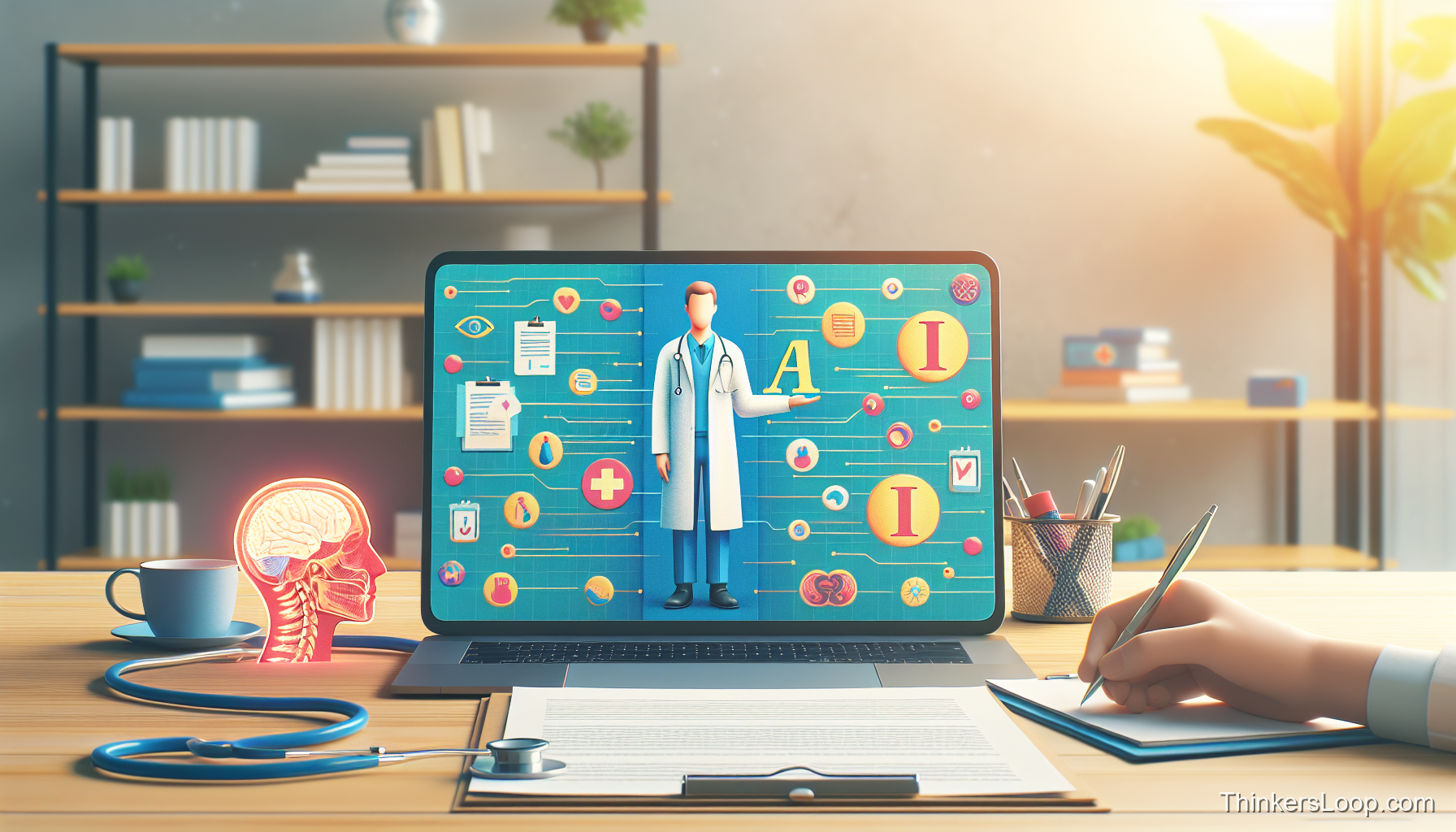
Imagine waking up in the middle of the night with a persistent cough and slight fever. Reaching for your phone, you ask an AI assistant for insights into your symptoms. Within seconds, it provides a detailed analysis, complete with potential diagnoses and treatment suggestions. This scenario is becoming increasingly common as more people turn to AI for medical information. But how reliable is this advice, and what are the potential risks?
Artificial Intelligence has infiltrated various aspects of our lives, from personal assistants to self-driving cars. In the realm of healthcare, AI promises to revolutionize how we access and understand medical information. However, relying solely on AI for health advice can lead to misinformation, misdiagnosis, and misuse of treatments.
Understanding the limitations and risks associated with AI in healthcare is crucial for safe usage. While AI can enhance health literacy, over-reliance might lead you to overlook the nuances that only a trained healthcare professional can provide.
In this article: Why People Turn to AI · The Specificity Trap · The Role of AI in Health Literacy · Misinformation at Scale · Safe Use of AI Health Tools
Why People Turn to AI for Health Questions
Before your next doctor’s appointment, you look up your symptoms. Before that, you asked an AI assistant. This sequence is now common — and understandable. AI tools are available at 3am, don’t require appointments, don’t make you feel judged for asking basic questions, and can explain medical concepts in plain language. These are real advantages, and they explain the rapid adoption of AI for health information.
The convenience and accessibility of AI health tools are unmatched, but this doesn’t equate to reliability.
The problem is that the properties that make AI health assistants feel trustworthy — confident, detailed, fluent, specific responses — are independent of whether the information is actually accurate or appropriate for your situation. Understanding where this goes wrong is not about rejecting AI health tools entirely, but about using them in ways that are genuinely safe.
Consider a scenario where a person with a history of heart disease uses an AI tool to find out about chest pain. The AI might provide an array of possible causes without the urgency a doctor might express. This lack of personalized urgency could lead to dangerous delays in seeking necessary medical attention.
The Specificity Trap
Medical knowledge is highly context-dependent. The same symptom means something different in a 25-year-old athlete and a 65-year-old with two chronic conditions. Drug interactions depend on the full list of current medications. Dosing recommendations vary by weight, kidney function, and drug metabolism genetics. A diagnosis requires not just symptoms but examination, history, and often tests. An AI that gives you a confident, specific answer about what your symptoms mean or what dose to take is answering a question that cannot responsibly be answered without your specific medical context.
According to a 2023 study published in JAMA Internal Medicine, AI frequently provides health advice that lacks the necessary context for accurate medical guidance.
The AI doesn’t know it doesn’t have the context it needs. It produces a confident, specific answer anyway — because confident, specific prose is what language models are optimized to produce. This is the core risk: not that AI gives obviously wrong answers, but that it gives plausible-sounding answers to questions that require personalized medical knowledge it doesn’t have.
Imagine a young woman named Emily using AI to understand her recurring headaches. The AI might suggest dehydration or stress, common and plausible explanations. However, without considering her medical history of migraines, the advice might lead her to dismiss seeking professional help, potentially worsening her condition.
What AI Does Well in Health Contexts
AI tools are genuinely useful for understanding medical concepts in plain language — what a diagnosis means, how a drug class works, what a medical procedure involves, what questions to ask a doctor. For this kind of health literacy use — increasing your understanding so you can participate more effectively in your own healthcare — AI is often excellent.
Utilize AI to bolster your understanding: Use tools like Medscape or UpToDate to research medical terminology and procedures before visiting your doctor.
The appropriate framing is: AI helps you understand; your doctor helps you decide. Using AI to prepare for a medical appointment, to understand information you’ve already received from a healthcare provider, or to learn general background on a condition is low-risk and often valuable. Using AI as a substitute for professional diagnosis or treatment recommendations is where things go wrong.
Consider the case of John, who was recently diagnosed with diabetes. He used AI to understand dietary changes and exercise regimens. This empowered him to ask informed questions during his doctor’s visit, facilitating a more personalized and effective treatment plan.
Misinformation at Scale
Individual errors in AI medical information are one problem. The systemic problem is scale. When millions of people receive slightly inaccurate, context-free, or outdated medical information from AI tools, and some proportion act on it, the population-level health effects could be significant. Healthcare systems are already seeing patients who have self-diagnosed or self-treated based on AI guidance, sometimes correctly and sometimes in ways that delayed necessary care or caused harm.
AI’s scalability can turn minor misinformation into a widespread health hazard.
In the UK, a report by the British Medical Journal in 2022 highlighted cases of patients using AI to manage chronic pain, only to return to clinics with worsened symptoms due to improper medication adjustments.
This scenario underscores the importance of integrating AI insights with professional medical advice, ensuring that the AI’s output serves as a supplementary resource rather than a primary advisor.
The Way to Use AI Health Tools Safely
Use AI to learn, not to decide. Use it to understand what a term means, not to diagnose what you have. Use it to prepare questions, not to replace the appointment where those questions get answered. Treat any specific numerical guidance — doses, ranges, durations — with skepticism and verify with a pharmacist or physician. Remember that your health situation is specific to you in ways an AI cannot account for.
Cross-check AI advice with healthcare professionals to prevent misdiagnosis or incorrect treatment.
The most dangerous use is also the most common: asking an AI to confirm a self-diagnosis. Language models have a known tendency to be agreeable. They will often validate a hypothesis rather than challenge it, even when the hypothesis is wrong. A doctor is trained to consider alternative diagnoses; an AI trained on human feedback tends toward the responses that felt helpful — which often means confirming what the person wanted to hear.
Take the story of Sarah, who asked an AI to confirm her suspicion of having flu based on symptoms. The AI agreed, but her condition was later diagnosed as early-stage pneumonia. This example highlights why professional medical evaluation remains irreplaceable.
Frequently Asked Questions
Can AI replace doctors for diagnosing illnesses?
AI should not replace doctors for diagnosis. While AI can provide information and enhance understanding, it lacks the contextual insight that healthcare professionals offer.
What are the best uses of AI in healthcare?
AI excels in providing general medical knowledge, simplifying complex information, and aiding in research. It should be used as a tool for understanding and preparation.
Is AI-generated medical information always reliable?
AI-generated medical information can be inaccurate or outdated. It is crucial to cross-reference with professional medical sources and consultations.
How can I use AI tools effectively for my health?
Use AI to enhance your understanding of medical conditions, prepare for doctor visits, and learn general health information. Always consult a healthcare professional before making health decisions based on AI advice.
The Short Version
- Use AI for understanding — Not for diagnosing or deciding on treatments.
- Verify AI information — Always cross-check with professional sources.
- AI complements, doesn’t replace — Doctors provide essential context that AI lacks.
- Beware of the specificity trap — AI may sound confident but lacks personalized insights.
- Stay informed, stay safe — Use AI to prepare for medical consultations, not replace them.
People Also Search For
AI in healthcare risks · AI medical diagnosis accuracy · AI vs doctors in healthcare · AI health tools examples · AI for patient education · Misdiagnosis by AI · AI health information reliability · AI in clinical settings · AI-driven medical advice · AI healthcare applications
Sources
- Ayers, J. W., et al. (2023). Comparing Physician and Artificial Intelligence Chatbot Responses to Patient Questions. JAMA Internal Medicine.
- Singhal, K., et al. (2023). Large Language Models Encode Clinical Knowledge. Nature.
- FDA. (2023). Artificial Intelligence and Machine Learning in Software as a Medical Device. fda.gov.