The Machinery Behind the Automatic
Habits are so central to human functioning that it’s easy to forget they’re a relatively recent understanding. The brain regions responsible for habit formation, the neurochemical processes that reinforce them, and the reason they’re so difficult to change once established — these are scientific discoveries of the last few decades, not traditional wisdom dressed up in neuroscience language.
Understanding what your brain is actually doing when a habit forms, runs, and gets updated changes how you approach behaviour change. The standard advice — “just be more disciplined,” “use willpower,” “commit harder” — misidentifies the mechanism. The neurological reality suggests a different set of interventions that work with the brain’s architecture rather than against it.
The Basal Ganglia: Your Habit Storage
When you first learn a behaviour — driving a new route, learning a skill, forming a new practice — it requires significant cognitive resources. Your prefrontal cortex (responsible for planning, decision-making, and conscious attention) is heavily engaged. The behaviour is deliberate, effortful, and requires active attention to execute.
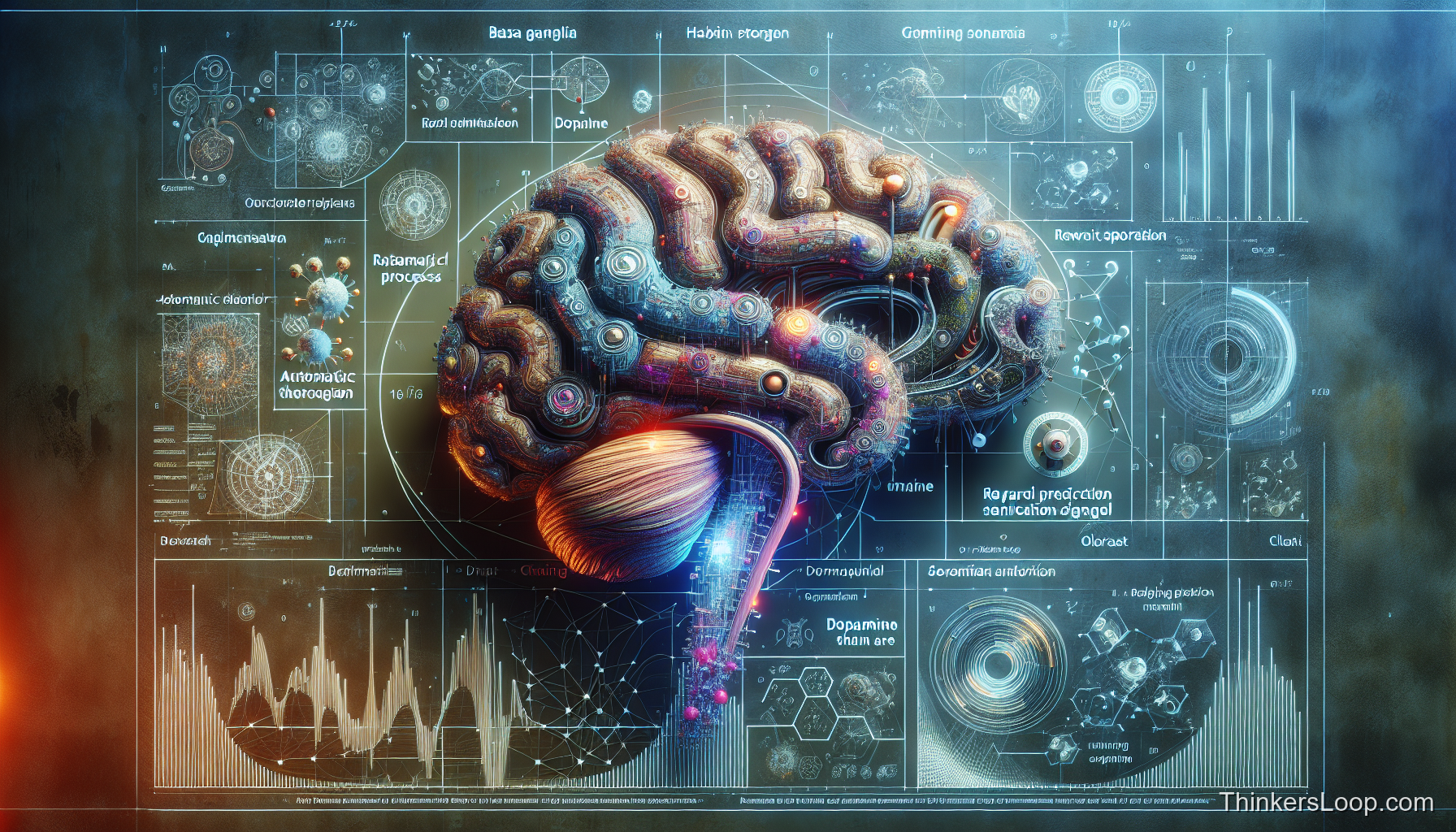
With repetition in the same context, control gradually shifts from the prefrontal cortex to the basal ganglia — a set of structures deep in the brain involved in movement coordination and the automation of repeated behaviours. This shift is the formation of a habit. Once control transfers to the basal ganglia, the behaviour can run with minimal prefrontal involvement. This is efficient — your cognitive resources are freed for other things — and it’s also why changing an established habit requires conscious effort while running it requires almost none.
Dopamine and the Reward Prediction Signal
Dopamine is often described as the “reward chemical,” but the neuroscience is more precise. Research by Wolfram Schultz showed that dopamine neurons don’t fire in response to rewards themselves — they fire in response to reward predictions. When a cue predicts a reward, dopamine is released. When the reward arrives as predicted, dopamine levels return to baseline. When the reward fails to arrive as predicted, dopamine drops below baseline.
This prediction error signal is what drives learning and habit formation. The brain is continuously updating predictions about which cues predict which rewards, and dopamine is the signal that communicates whether predictions were accurate. This is why variable reward schedules (like slot machines, or social media “like” counts) are so potent — unpredictable rewards produce larger dopamine responses than predictable ones.
Why Habits Are So Hard to Break
Habits don’t get deleted from the basal ganglia — they get suppressed or overridden. Research on habit reversal consistently shows that the original habit pattern remains in the neural architecture even after a new behaviour has been established. In high-stress or high-fatigue conditions, the original habit tends to reassert itself because the prefrontal inhibition that was suppressing it is reduced.
This explains the common experience of reverting to old habits under stress, even years after apparent change. The original neural pathway is still there — it just needs sufficient prefrontal resources to override it, and stress or fatigue depletes those resources. The practical implication: create environments that reduce the need for active override, rather than relying on willpower that depletes.
What This Means for Behaviour Change
- Context matters more than willpower: Habits are cued by context — changing the context changes the cue and makes new habits easier to establish
- Immediate rewards accelerate formation: The brain learns from proximal consequences; building immediate positive experiences into desired habits speeds up automatisation
- Stress is the enemy of new habits: Prefrontal depletion under stress reverts behaviour to established patterns — new habits need low-stress conditions to consolidate
- Environment design over willpower: Making desired behaviours the path of least resistance works with the basal ganglia rather than against it
Key Takeaways
- Habits form as control shifts from the effortful prefrontal cortex to the automatic basal ganglia
- Dopamine signals reward prediction errors — it teaches the brain which cues predict rewards, not just that rewards feel good
- Old habits aren’t deleted; they’re suppressed — stress can reactivate them by depleting the resources needed for suppression
- Environment design is more reliable than willpower because it works with the brain’s automation rather than against it
- New habits consolidate faster when they’re practised in the same context and paired with immediate positive consequences
Watch: Related Video
Sources
- Graybiel, A. (2008). Habits, rituals, and the evaluative brain. Annual Review of Neuroscience.
- Schultz, W. (1998). Predictive reward signal of dopamine neurons. Journal of Neurophysiology.
- Wood, W. & Rünger, D. (2016). Psychology of Habit. Annual Review of Psychology.