
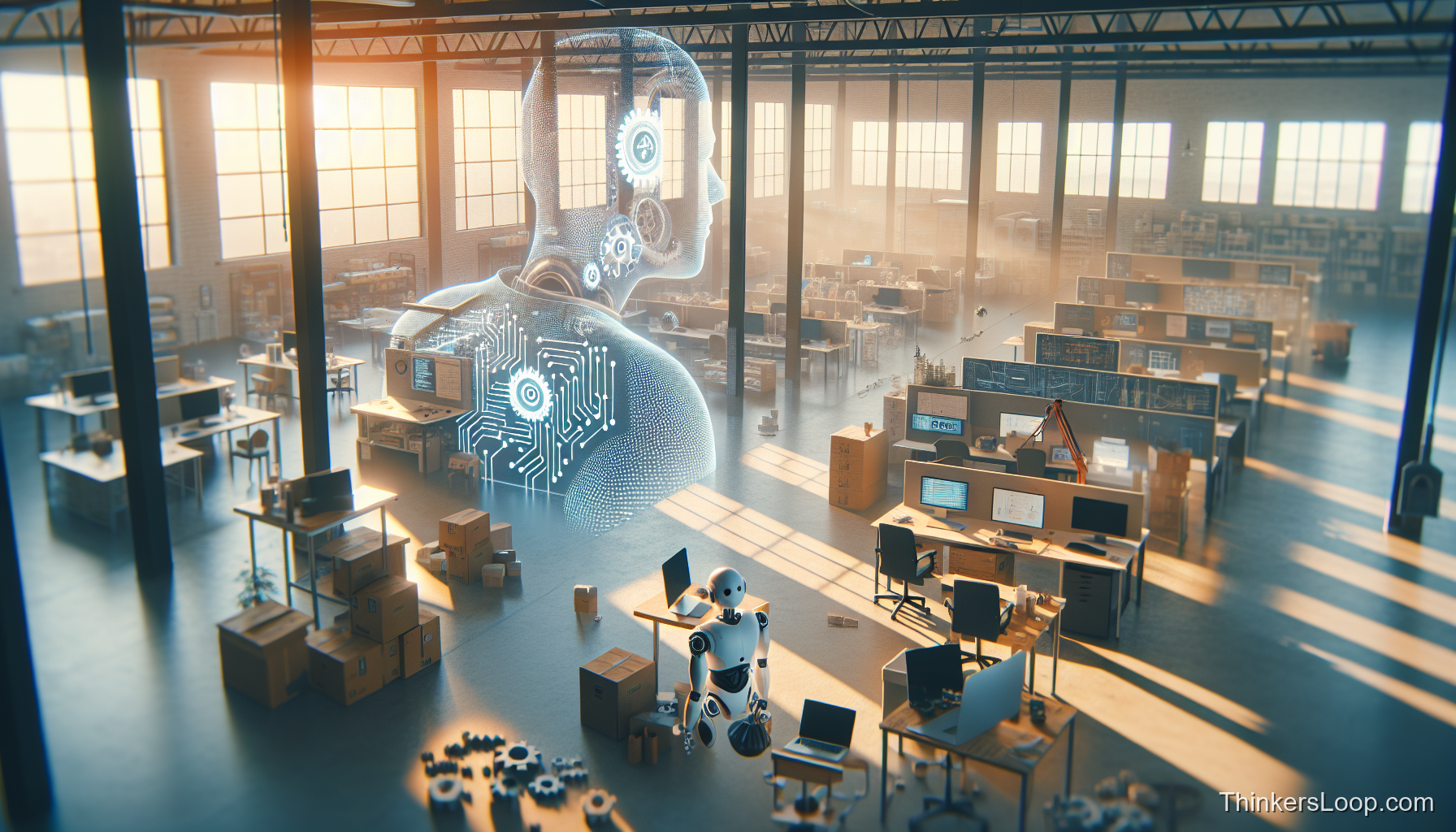
The Rise of AI: A Brief Overview
The advent of artificial intelligence (AI) has revolutionized numerous industries, from healthcare to finance. As we navigate through the 21st century, AI’s influence on the job market has become one of the most hotly debated topics. While many fear that machines will replace human jobs, others argue that AI will create new opportunities and enhance productivity. To understand this dynamic, it’s crucial to look at the data and trends shaping our labor market.
In recent years, the global conversation around AI has intensified, fueled by advancements in machine learning, natural language processing, and robotics. According to a report by McKinsey, by 2030, automation could displace up to 30% of jobs in the U.S. alone. However, the same report suggests that AI could create as many as 20 million new jobs globally. The question remains: how will these changes affect the workforce, and what types of jobs will be most impacted?
Job Displacement: The Hard Facts
Job displacement due to AI and automation is not a distant concern; it is happening now. According to the World Economic Forum, the pandemic accelerated the adoption of AI technologies, leading to significant shifts in the job landscape. The sectors most at risk include manufacturing, retail, and administrative positions, where tasks can be easily automated.
Statistics indicate that in the next five years, 85 million jobs may be displaced by shifts in labor between humans and machines. This number is staggering, and while it may seem alarming, it is essential to note that displacement does not equate to job loss. Many roles will evolve, requiring workers to adapt and develop new skills to thrive in an AI-driven economy.
New Opportunities: Jobs Created by AI
While the displacement of jobs is a real concern, the potential for new job creation is equally significant. According to a report by Gartner, AI is expected to create 2.3 million jobs by 2025, particularly in sectors that require distinctly human skills such as creativity, empathy, and strategic thinking. These roles will not only bolster the economy but also transform our understanding of work.
Positions such as AI trainers, data analysts, and machine learning specialists will be in high demand. Moreover, industries like healthcare will see an increase in jobs as AI enhances patient care through predictive analytics and personalized medicine. As machines take over repetitive tasks, humans can focus on more fulfilling work that requires critical thinking and emotional intelligence.
The Skills Gap: Preparing for Change
One of the most pressing challenges is the skills gap in the workforce. As industries evolve, the demand for skilled workers who can operate alongside AI technologies will grow. A report from the Brookings Institution highlights that 37% of U.S. workers may need to switch occupations due to AI and automation. This transition will require significant investment in education and training to equip workers with the necessary skills.
Soft skills—such as communication, problem-solving, and teamwork—will become increasingly valuable. Technical skills, particularly in data science and programming, will also be essential. Lifelong learning will no longer be a luxury but a necessity for workforce survival. Companies are recognizing this need and are beginning to invest in employee training programs that focus on upskilling their workforce.
The Role of Government and Policy
Governments play a crucial role in shaping the future of work in an AI-driven economy. Policymakers must create frameworks that support workers during this transition. This includes investing in education, promoting technical training, and establishing safety nets for displaced workers. Countries like Singapore and Germany are leading the way with initiatives that focus on skill development and workforce adaptation.
Furthermore, policies that encourage collaboration between the public and private sectors can foster innovation and create more job opportunities. By incentivizing companies to invest in AI responsibly, we can mitigate the negative impact on employment while simultaneously reaping the benefits of technological advancement.
AI and Remote Work: A New Paradigm
The COVID-19 pandemic has accelerated the shift toward remote work, a trend that AI is poised to enhance. Tools powered by AI can optimize productivity, streamline communication, and improve collaboration among remote teams. This new paradigm also allows businesses to tap into a global talent pool, transcending geographic barriers that previously limited hiring.
However, this shift also presents challenges, particularly in terms of maintaining company culture and employee engagement. Companies must leverage AI to create a work environment that fosters connection and collaboration, even when teams are distributed. The future will likely see a hybrid work model that combines the best of both worlds—flexibility enabled by technology and the human touch that drives innovation.
What the Data Shows: The Numbers Behind the Narrative
| Impact of AI on Job Market | Jobs Displaced | Jobs Created |
|---|---|---|
| Manufacturing | 20 million | 5 million |
| Healthcare | 2 million | 3 million |
| Retail | 10 million | 4 million |
| Finance | 5 million | 2 million |
The table above illustrates the potential impact of AI on various sectors, highlighting the stark numbers of both jobs displaced and created. It’s clear that while some industries face significant disruption, others are experiencing a boost that may reshape the employment landscape in the years to come.
Ultimately, the data reveals a nuanced picture. Job displacement is a reality, but so is job creation. The challenge lies in fostering a workforce that is agile and prepared to adapt to ongoing changes. As we continue to harness the power of AI, a proactive approach towards education, training, and policy-making will be essential in navigating this transformation.
- AI is expected to displace 85 million jobs by 2025, while creating 2.3 million new roles.
- Workers in manufacturing, retail, and administrative roles are at the highest risk of displacement.
- New job opportunities in AI-related fields will require a blend of technical and soft skills.
- Government policies are vital in supporting workforce transition and upskilling initiatives.
- The shift to remote work, accelerated by the pandemic, presents both opportunities and challenges for workers and businesses.
Watch: Related Video
Sources
- McKinsey, (2021). The Future of Work After COVID-19. McKinsey & Company.
- World Economic Forum, (2020). The Future of Jobs Report 2020. World Economic Forum.
- Brookings Institution, (2021). The Labor Market and AI: A Review of the Evidence. Brookings Institution.
- Gartner, (2021). 2025: The Future of Work. Gartner Inc.