
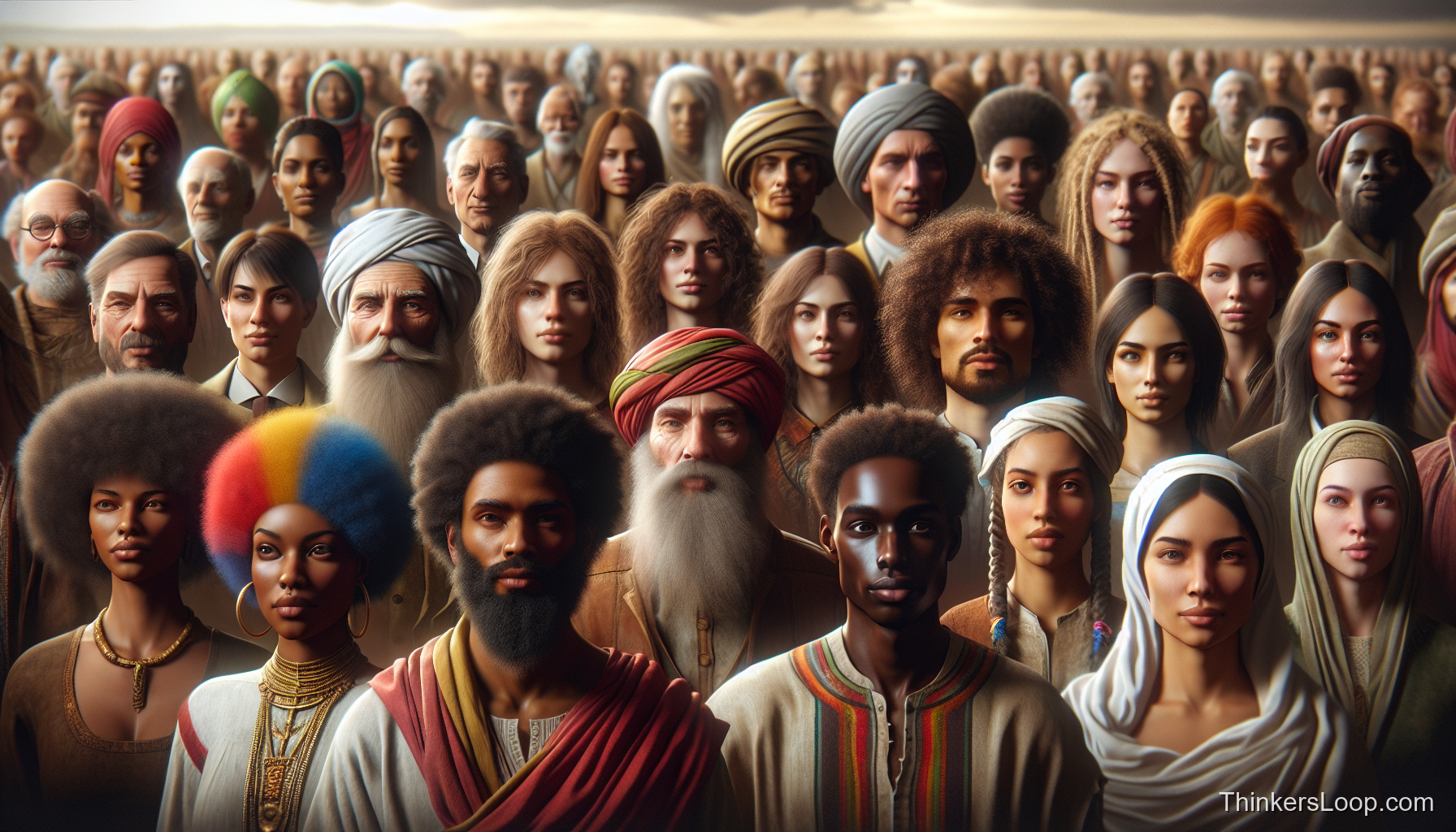
Quick take: Hair has never been just hair. Throughout human history, the way people wear their hair has communicated everything from social rank and religious devotion to political rebellion and cultural pride. Understanding the history of hairstyles reveals how deeply personal appearance is intertwined with power, identity, and belonging.
Few things seem as trivial as a haircut, and few things turn out to be as loaded with meaning. A shaved head can signal religious devotion, military discipline, cancer treatment, or punk rebellion — depending entirely on context. Long hair can represent femininity, spiritual commitment, counterculture defiance, or simple personal preference. The same physical arrangement of dead protein cells carries wildly different meanings across cultures and centuries.
This is what makes hair such a fascinating lens for understanding culture. It sits at the intersection of biology, identity, politics, and aesthetics in a way that almost nothing else does. And the history of who has been allowed to wear their hair how, and what consequences followed when they did not comply, tells us more about power structures than most conventional history books bother to address.
Ancient Hair Was Always Political
The idea that hairstyles carry social meaning is not a modern phenomenon. In ancient Egypt, elaborate wigs and braiding patterns were markers of social class, with commoners wearing simple styles and elites sporting increasingly complex arrangements. Priests shaved their heads entirely as a sign of ritual purity. The effort and expense involved in maintaining elaborate hair was itself a display of status — you could not tend a complex wig while working in a field.
Roman women’s hairstyles became a form of competitive social display as the empire grew wealthier. Styles became so elaborate that specialized enslaved hairdressers called ornatrices became valuable household assets. When you study what ancient Rome teaches about leadership, the politics of appearance — including hair — reveals how deeply image management was embedded in Roman public life. In China, the queue hairstyle imposed by the Manchu Qing dynasty on Han Chinese men was an explicit tool of political subjugation, and resistance to it carried the death penalty.
In ancient Sparta, warriors grew their hair long before battle and spent considerable time grooming it. Rather than vanity, this served a psychological purpose — Spartan soldiers believed that long, well-maintained hair made them appear more intimidating to enemies and more beautiful in death.
Hair as Religious and Spiritual Expression
Virtually every major religion has developed specific practices around hair. Sikh men maintain uncut hair (kesh) as one of the five articles of faith, covering it with a turban. Buddhist monastics shave their heads upon ordination to symbolize renunciation of worldly attachments. Orthodox Jewish married women cover their hair, and Hasidic men wear distinctive side curls called payot. These are not arbitrary customs — they connect to deep theological concepts about the body, modesty, and devotion.
The enforcement of religious hair norms has also been a site of profound conflict. The forced cutting of Indigenous children’s hair in boarding schools across North America and Australia was a deliberate act of cultural erasure. For many Indigenous cultures, long hair carries spiritual significance that goes far beyond aesthetics — cutting it was understood as an assault on identity itself. This history connects to broader patterns of how institutions have wielded cultural tools to reshape populations, something you can explore further through the forgotten history of libraries and how knowledge systems have been used to preserve or destroy cultural identity.
Hair occupies a unique psychological space because it is simultaneously part of the body and something that can be voluntarily altered. This duality makes it an unusually potent symbol — changes to hair feel more personal than changes to clothing because hair is, quite literally, part of you.
Hair as Conformity
Military buzz cuts, corporate grooming standards, school uniform hair policies, and religious covering requirements all use hair regulation to signal belonging to a group. Conformity in hairstyle communicates discipline, submission to authority, and willingness to subordinate individual expression to collective identity. These norms persist because they work as social bonding mechanisms.
Hair as Rebellion
Punk mohawks, hippie long hair, shaved heads on women, and natural Black hairstyles in corporate settings all use hair to signal resistance to dominant cultural norms. Rebellious hairstyles derive their power precisely from violating expectations. The discomfort they provoke in authority figures is not a side effect — it is the point, a visible declaration of refusal to conform.
The Racial Politics of Hair in America
No conversation about hairstyles and identity is complete without addressing the specific racial dimensions of hair politics in the United States. For Black Americans, hair has been a battleground for centuries. Enslaved people were frequently forced to cover or cut their hair. After emancipation, conformity to European hair standards became an implicit requirement for social and economic advancement. Straightening treatments and chemical relaxers became ubiquitous not because of preference but because of institutional pressure.
The natural hair movement that gained momentum in the 2010s represented a significant cultural shift, with Black women and men increasingly choosing to wear their hair in its natural texture — afros, locs, braids, twists, and coils. This was not merely an aesthetic choice. It was a political statement about the right to exist in professional and public spaces without conforming to Eurocentric beauty standards. The passage of the CROWN Act in multiple states formalized what many had long argued: that hair discrimination is racial discrimination.
“When a society polices how people wear their hair, it is never really about hair. It is about who gets to define what looks professional, respectable, and acceptable — and who benefits from those definitions.”
How Mass Media Changed Everything
The twentieth century introduced something genuinely new to the history of hair: mass media. For the first time, hairstyle trends could spread across entire populations within months rather than decades. Hollywood stars like Veronica Lake, Audrey Hepburn, and Farrah Fawcett did not just influence fashion — they created hairstyles that millions of people adopted simultaneously. Television and magazines created a shared visual culture that made certain styles feel universal rather than regional.
The speed of trend cycles accelerated even further with social media. Platforms like Instagram and TikTok can make a hairstyle go viral overnight. But this democratization has also created tension. The line between appreciation and appropriation — wearing cornrows as a fashion statement without understanding their cultural significance, for instance — has become a recurring flashpoint. This debate reflects broader questions about cultural exchange that parallel how the printing press changed the world by making information and culture portable in ways that outpaced social norms.
Cultural appropriation of hairstyles is not just about aesthetics. When dominant-culture individuals receive praise for wearing styles that marginalized people face discrimination for wearing, it highlights and reinforces existing power imbalances rather than bridging cultural divides.
What Hair Tells Us About the Future of Identity
Today, attitudes toward hair are shifting in ways that reflect broader cultural changes. Gender-neutral salons are becoming more common. Workplace grooming policies are being challenged and revised. Young people increasingly treat hair as a form of self-expression rather than a signal of group membership. The relaxation of rigid hair norms in many institutions suggests a gradual expansion of what is considered acceptable — though that expansion remains uneven and contested.
But the fundamental truth remains: hair communicates. Whether you intend it to or not, your hair sends signals about who you are, where you belong, and what you value. The history of hairstyles is ultimately the history of human identity — constantly negotiated, deeply personal, and always political. Studying what made ancient civilizations collapse shows that cultural markers like hair have always been among the last things communities surrender when facing external pressure.
If you want to understand the power dynamics of any institution, look at its grooming policies. Who is required to modify their natural appearance, and who is not, reveals assumptions about professionalism and belonging that are rarely stated explicitly.
The Short Version
- Hairstyles have served as markers of social status, religious identity, political affiliation, and cultural belonging throughout human history.
- The forced modification of hair has been used as a tool of political and cultural subjugation across multiple continents and centuries.
- The natural hair movement and the CROWN Act represent a significant shift in recognizing hair-based discrimination as a civil rights issue.
- Mass media and social media have accelerated hairstyle trend cycles while raising new questions about cultural appropriation and exchange.
Frequently Asked Questions
Why have hairstyles been so important throughout history?
Hair is one of the most visible and easily modified aspects of personal appearance, making it a powerful medium for communicating social status, religious identity, political affiliation, and cultural belonging. Unlike clothing, hair is part of the body itself, which gives it an intimate connection to identity that purely external markers lack.
What is the CROWN Act?
The CROWN Act — Creating a Respectful and Open World for Natural Hair — is legislation prohibiting discrimination based on hair texture and protective hairstyles associated with race. First passed in California in 2019, it has since been adopted by over twenty states and reflects growing recognition that hair-based discrimination disproportionately affects Black Americans.
How did ancient civilizations use hairstyles?
Ancient Egyptians used elaborate wigs and braiding to denote social rank. Roman women’s hairstyles became increasingly complex as the empire expanded, reflecting wealth and status. In many Asian cultures, specific hair arrangements signified marital status, age, and social position. Vikings used particular styles to distinguish warriors from civilians.
Why do some religions have rules about hair?
Hair regulations in religion often connect to concepts of modesty, devotion, and separation from worldly concerns. Sikh men maintain uncut hair as one of the five articles of faith. Many Christian denominations historically required women to cover their hair during worship. Buddhist monastics shave their heads to symbolize renunciation of vanity and attachment.
history of hairstyles, hair and cultural identity, natural hair movement, CROWN Act explained, hair discrimination, ancient hairstyles meaning, religious hair practices, hair politics and power