
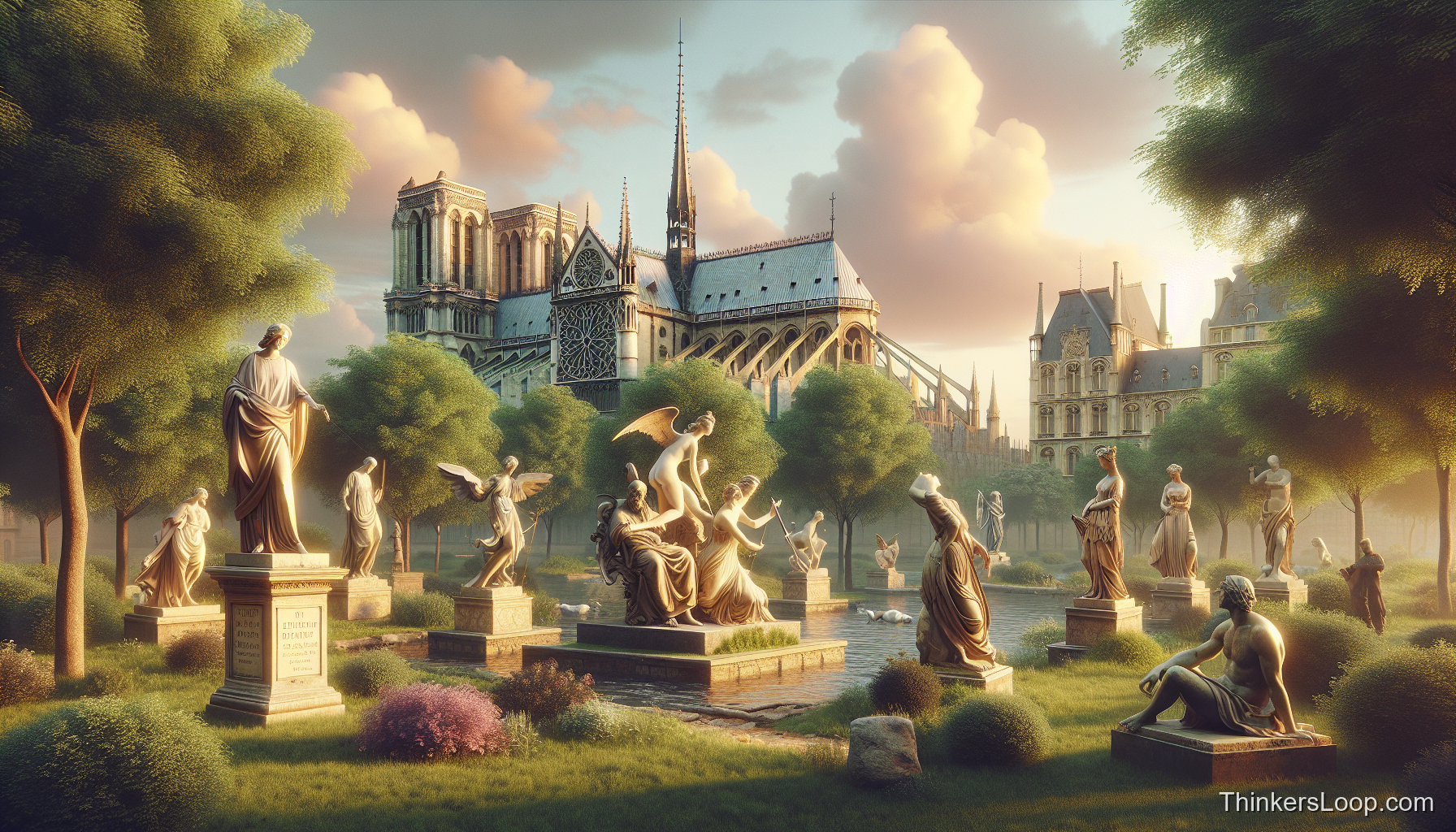
Quick take: Art history is not about memorizing painters and dates — it is a training program for your eyes and brain. Learning to look at art teaches you to see patterns, read visual language, and understand how images shape perception in ways that are directly useful in everyday life.
Most people think of art history as one of the most impractical subjects imaginable — a luxury for people who can afford to spend time contemplating brushstrokes instead of doing something useful. This reputation is understandable but wrong. Art history is, at its core, a discipline of looking. It trains you to observe carefully, interpret visual information, recognize patterns, and understand how images communicate meaning. In a world that is increasingly visual — where you encounter thousands of images daily through screens, advertisements, and designed environments — these are among the most practical skills you can develop.
The problem is that art history is almost always taught wrong. It gets presented as a timeline of masterpieces to memorize, a parade of isms and movements, names and dates. That approach is about as useful as teaching literature by making students memorize publication dates without reading the books. The real value of art history is not knowing when the Renaissance happened — it is learning to see things you have been looking at your entire life without actually noticing.
Visual Literacy Is a Skill, Not a Talent
The most important thing art history teaches is visual literacy — the ability to read images the way you read text. This sounds abstract until you consider how much of modern life is mediated through images. Advertising, political campaigns, social media, product design, architecture, urban planning — all of these use visual communication to influence your behavior, and most people navigate this visual landscape without any formal training in how images work.
Art history provides that training by making the mechanisms of visual communication visible. When you study how Renaissance painters used perspective to create the illusion of depth, you begin to notice how photographers and filmmakers use the same techniques to direct your attention. When you learn how color theory works in Impressionist painting, you start seeing how retail stores and restaurants use color to influence your mood and spending. The skills transfer because the underlying principles of visual communication have not changed — they have just moved from canvas to screen. Understanding how the printing press changed the world reveals a similar pattern where a technology designed for one medium reshaped how people processed information across all media.
Yale Medical School’s art observation program, which trains medical students to analyze paintings at the Yale Center for British Art, has been shown to improve diagnostic accuracy by 56% compared to students who received only traditional clinical training. The skill of careful looking transfers directly from art to medicine.
How Art Trains You to Notice What You Normally Miss
One of the most documented effects of art history training is improved attention to detail in everyday observation. Studies in cognitive psychology have shown that people trained in visual art analysis spend more time examining visual scenes, notice more peripheral details, and are better at detecting inconsistencies or anomalies. This is not because art lovers are inherently more observant — it is because the practice of analyzing complex visual compositions trains the brain to process visual information more thoroughly.
Consider what happens when you look at a painting by Vermeer. An untrained viewer sees a pretty scene — a woman reading a letter, light streaming through a window. A trained viewer sees the precise geometry of the light source, the symbolic meaning of the objects on the table, the deliberate choice of colors that guide the eye across the composition, the historical context that explains why the subject matter would have resonated with a 17th-century Dutch audience. The painting has not changed — what has changed is the viewer’s ability to extract information from it.
The difference between looking and seeing is the same as the difference between hearing and listening. Art history does not give you better eyes — it gives you better attention. And better attention, once developed, does not stay confined to museums. It follows you into every visual encounter.
Untrained Viewing
Quick emotional reaction — like it or do not. Focuses on subject matter and immediate impression. Misses compositional choices, color relationships, and symbolic content. Accepts visual information passively without questioning how images are constructed to produce specific responses. Vulnerable to visual manipulation in advertising and media.
Trained Viewing
Structured observation that moves between whole and detail. Notices composition, light, color, texture, and spatial relationships. Reads symbolic content and cultural references. Understands how visual choices produce emotional and cognitive responses. Applies critical analysis to all visual media, from art to advertising to political imagery.
Art as a Window into How Cultures Think
Every artwork is a document of how its culture understood reality. Medieval paintings with flat perspective and symbolic proportions — where saints are larger than ordinary people — reflect a worldview where spiritual hierarchy mattered more than physical accuracy. Renaissance perspective painting reflects a culture newly obsessed with individual perception and empirical observation. Modern abstract art reflects a world where certainty about objective reality had broken down. Learning to read these visual languages is learning to understand how different cultures experienced and organized their world.
This is not just historical knowledge — it is a framework for understanding cultural difference in the present. When you grasp that visual representation always reflects cultural values, you become better at reading the visual culture around you. You notice that corporate architecture communicates power in specific, deliberate ways. You see that social media aesthetics reflect particular ideas about identity and authenticity. You understand that the way a news broadcast is visually composed shapes how you interpret its content. Learning about the theft of the Mona Lisa and celebrity culture shows how cultural narratives shape what we value in art — and how that process works in reverse, with art shaping what we value in culture.
“Art history is not a subject about the past — it is a set of tools for the present. Every image you encounter is making an argument, and art history teaches you how to hear what it is saying.”
The Practical Applications You Would Not Expect
The professional applications of art historical thinking extend far beyond museums and galleries. Doctors trained in art observation make better diagnoses because they notice visual details that untrained observers miss. Lawyers who study visual rhetoric are better at constructing persuasive visual presentations. Business professionals who understand design principles make better decisions about branding, marketing, and product development. The common thread is that careful, informed looking is useful in any field where visual information matters — which is nearly every field.
Urban planners who understand art history design better public spaces because they grasp how visual environments affect human behavior and well-being. Journalists who understand visual communication create more effective and more ethical reporting. Even personal decisions — choosing where to live, how to furnish a home, what to wear — benefit from the ability to analyze visual choices rather than simply reacting to them. Understanding the forgotten history of libraries reveals a parallel truth — institutions that seem impractical often provide the most essential infrastructure for intellectual development.
The biggest misconception about art history is that it requires innate artistic talent or sensitivity. It does not. Visual literacy is a learned skill, like reading text. Anyone can develop it with practice, and everyone benefits from it in a world that communicates primarily through images.
Starting to See Differently Is Easier Than You Think
You do not need a degree or a museum membership to start developing the observational skills that art history teaches. You can begin by spending more time with individual images — pausing on a photograph, an advertisement, or a building facade and asking structured questions. What choices did the creator make? Where does your eye go first, and why? What is being emphasized and what is being hidden? What emotional response is the image designed to produce, and how does it produce it?
The goal is not to become an art expert — it is to become a more conscious participant in a visual world. Most people move through their daily environment absorbing visual information passively, accepting the emotional responses that images are designed to trigger without questioning the mechanisms behind them. Art history’s greatest gift is the ability to slow down, look deliberately, and understand what you are actually seeing. In a world that is working harder than ever to capture and direct your visual attention, that skill is not a luxury. It is a necessity.
Try this exercise: pick one image you encounter today — an ad, a building, a social media post — and spend five minutes analyzing it the way you would a painting. Ask what compositional choices were made, what mood was intended, and what the image is trying to make you think or feel. You will be surprised how much you start to notice.
The Short Version
- Art history teaches visual literacy — the ability to read images critically — which is increasingly essential in a visually saturated world.
- Training in art observation measurably improves attention to detail, with documented benefits in fields from medicine to law.
- Every artwork reflects how its culture understood reality, making art history a powerful tool for understanding both historical and contemporary cultural values.
- The practical applications extend to medicine, law, business, urban planning, journalism, and everyday decision-making.
- Visual literacy is a learned skill, not a talent — anyone can develop it through deliberate practice with structured observation.
Frequently Asked Questions
How does studying art history change how you see things?
Art history trains visual literacy — the ability to read images the way you read text. It teaches you to notice composition, color relationships, symbolic meaning, and cultural context, skills that transfer directly to everyday observation of advertising, architecture, film, and the built environment.
Do you need to be artistic to benefit from art history?
Not at all. Art history is about looking and thinking, not about making art. The skills it develops — careful observation, contextual analysis, understanding visual rhetoric — are intellectual skills that benefit anyone regardless of their artistic ability.
What is visual literacy and why does it matter?
Visual literacy is the ability to interpret, evaluate, and create meaning from images and visual information. In a world saturated with visual media, visual literacy is increasingly important for making informed decisions and resisting manipulation through images.
Can art history help with critical thinking?
Yes. Art history requires analyzing works within their historical, political, and cultural contexts, evaluating multiple interpretations, and constructing evidence-based arguments — all core critical thinking skills that transfer to any analytical field.
art history practical benefits, visual literacy skills, art observation training, how art changes perception, art history critical thinking, visual communication analysis, art history everyday life, learning to see art