
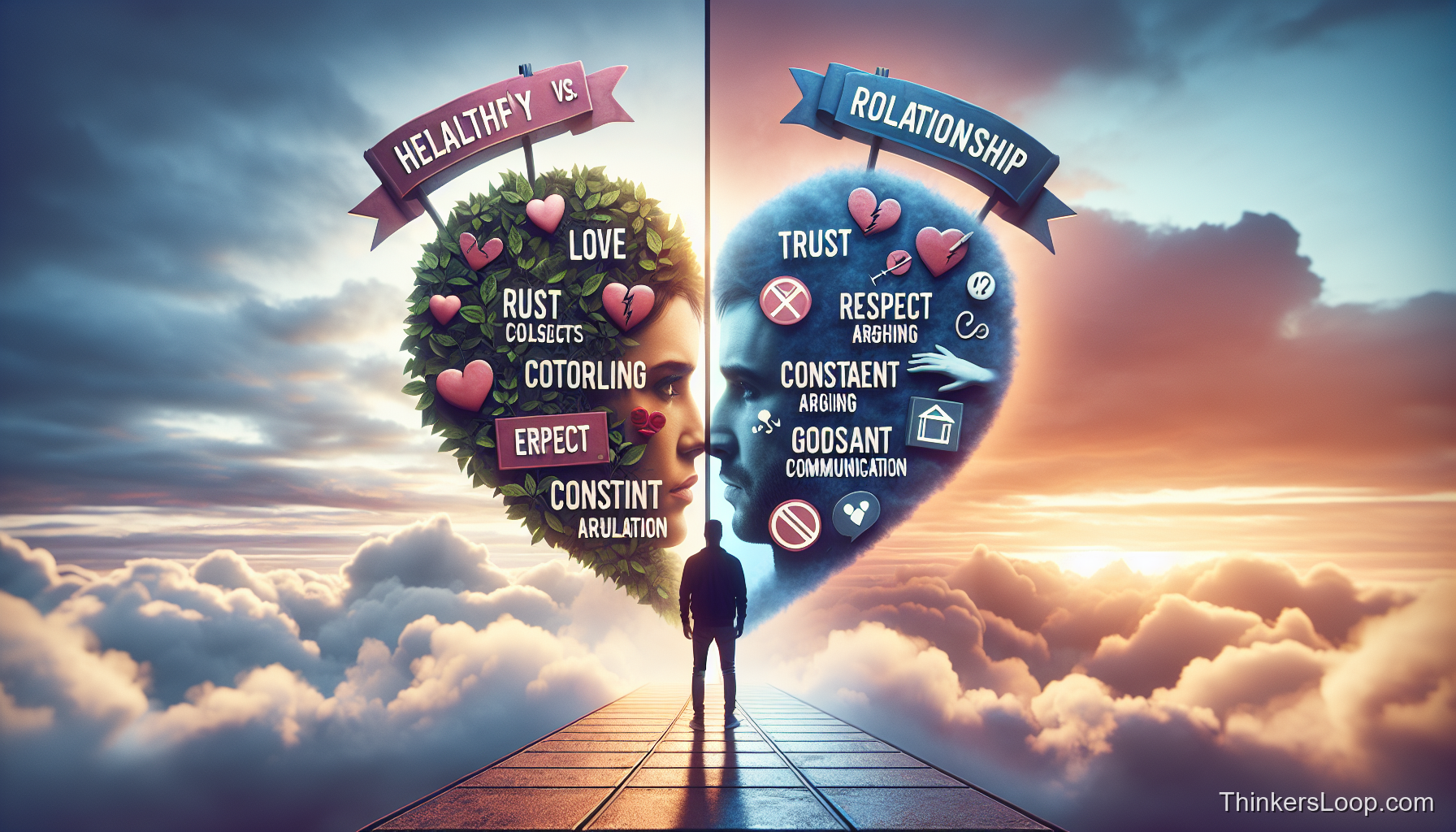
The word “toxic” has been applied to enough relationships that it’s beginning to lose meaning. People call relationships toxic when they’re uncomfortable, when partners disagree frequently, when conflict exists, when things are going through a rough patch. This dilution is a problem, because it obscures the genuine distinction between relationships that are difficult (which is most relationships at some point) and relationships that are systematically harmful.
The difference matters because the appropriate response is completely different. A difficult relationship often benefits from better communication, more intentional effort, and sometimes couples therapy. A toxic relationship, as the word is more precisely used, involves patterns of interaction that consistently damage one or both people’s wellbeing, self-worth, or safety. Treating a toxic relationship like a difficult one — trying harder, communicating more clearly, being more understanding — typically doesn’t help and can make things worse.
Here’s how to actually tell the difference.
In this article: What a healthy relationship actually looks like (not perfect — healthy) · The specific patterns that define toxicity · Why toxic relationships are so hard to see clearly from inside · What to do with what you find
What a Healthy Relationship Actually Looks Like
Healthy relationships are not characterized by the absence of conflict, the absence of difficulty, or constant happiness. That’s a fantasy version of relationship health, and holding it as the standard causes people to misread normal relationship challenges as signs of fundamental dysfunction. Healthy relationships are characterized by how difficulties are navigated, not by their absence.
The clearest markers of relationship health, drawn from decades of research by Gottman, Sternberg, and others: both people feel fundamentally safe expressing their needs and concerns. Conflict exists and gets addressed rather than suppressed or escalated into attacks on character. Each person maintains their own identity, friendships, and sense of self — the relationship adds to their lives rather than becoming their entire lives. Both people generally feel better about themselves in the relationship than outside it.
A healthy relationship has room for both people to be fully human — flawed, sometimes difficult, occasionally wrong — without either person’s selfhood being treated as a problem to be managed or corrected.
Crucially, healthy relationships have what Gottman called “repair mechanisms” — the ability to come back together after conflict, to acknowledge when you’ve contributed to a problem, to repair the connection after rupture. No relationship avoids rupture entirely; what distinguishes healthy ones is that repair is possible and practiced.
The Specific Patterns That Define Toxicity
“Toxic” in relationship terms refers to specific, identifiable patterns — not just the presence of conflict or unhappiness. These patterns are distinguished by their consistency (they recur regardless of circumstance), their directionality (they tend to damage one person more than the other), and their imperviousness to normal relationship repair efforts.
Gottman’s research identified four specific communication patterns — contempt, criticism, defensiveness, and stonewalling — as the most reliable predictors of relationship dissolution. Contempt (communicating disdain for a partner) was the single strongest predictor, associated with not just relationship failure but measurably worse physical health outcomes for the recipient.
Control and isolation are among the clearest toxic patterns: monitoring a partner’s communications, requiring explanations for time spent away, gradually limiting contact with friends and family. These behaviors are frequently rationalized as concern or love, but their consistent effect is to reduce the partner’s independence and external support — which makes leaving harder over time.
Systematic invalidation — consistently denying or minimizing a partner’s experience — is another core toxic pattern. This ranges from gaslighting (denying that events occurred or that the partner’s perception is accurate) to constant minimizing of concerns, to using a partner’s vulnerabilities against them in conflict. The cumulative effect is a partner who has lost confidence in their own perception of reality and experience of themselves.
Why Toxic Relationships Are Hard to See From Inside
If toxic relationship patterns were obviously damaging from the start, people wouldn’t stay in them. The difficulty of clear-eyed assessment from inside a toxic relationship comes from several compounding factors.
Ask people who knew you before the relationship how they’d describe you now vs. then. Have you become more isolated? Do you laugh less? Have you stopped pursuing things you cared about? Has your confidence changed? The people who know your before-version can often see changes the relationship has produced that you’re too close to notice — changes that are among the most reliable signals of toxicity’s cumulative effect.
The intermittent reinforcement of cycles — the genuine warmth that follows conflict, the improvements that occur after the person has crossed a significant line, the version of the partner that existed before the toxic patterns emerged — keeps people oriented toward the relationship’s best moments rather than its consistent patterns. Hope is not irrational in these situations; it’s a normal response to the good parts being real. The problem is that hope, in the absence of consistent behavioral change, maintains the situation rather than resolving it.
Difficult vs. Toxic: The Diagnostic Questions
These questions are more useful than trying to categorize the relationship from a checklist:
Difficult But Workable
Conflicts happen and feel painful, but both people acknowledge their role. You can raise concerns without facing punishment or consistent dismissal. Your sense of self is intact — you feel like you in this relationship. Outside the relationship’s difficult moments, you genuinely like and respect your partner. Both people are trying, even imperfectly. When things are hard, they get addressed rather than repeated indefinitely.
Toxic
The same conflicts cycle without resolution or acknowledgment. Raising concerns reliably produces punishment, dismissal, or having the concern turned against you. Your sense of self has diminished — you feel less capable, less worthy, or less clear about your own perceptions than before this relationship. Your life outside the relationship has contracted. The trying is consistently one-sided. Things don’t change despite repeated efforts and conversations.
What to Do With What You Find
If honest assessment suggests the relationship is difficult but workable — couples therapy, improved communication skills, and intentional effort are appropriate responses. Many relationships in this category improve significantly with the right support. If honest assessment suggests the relationship is systematically toxic — the appropriate response is different: get individual support, build your external network, and develop a realistic assessment of whether and how you can safely leave. Applying relationship repair tools to a toxic relationship is like trying to fix structural damage with interior paint. The intervention doesn’t match the problem.
Leaving a toxic relationship is often described, in retrospect, as the hardest thing that person ever did — and one of the best. The difficulty of leaving is not evidence that leaving is wrong. It’s evidence that the bond is real, that hope is human, and that the process of rebuilding a self that was gradually diminished takes courage and time. Both things can be true simultaneously.
Frequently Asked Questions
Can a toxic relationship become healthy?
In some cases, yes — particularly when the toxic patterns are relatively mild, both people have genuine insight into what’s happening, and both are willing to invest in sustained change (typically including individual and couples therapy). The honest caveat is that this is much rarer than people hope when they’re inside the relationship. Meaningful change requires the person generating the toxic patterns to want to change, pursue it actively, and maintain it consistently — which is a significantly different situation from the more common one where change is promised but not sustained.
Is it toxic if we fight a lot?
Frequency of conflict alone doesn’t indicate toxicity. Research shows that some couples with high conflict rates maintain long, satisfying relationships — what matters is how conflict is handled, not how often it occurs. If fights are frequent but involve genuine engagement with the issues, acknowledgment of each person’s role, and eventual repair — that’s difficult, not toxic. If fights are frequent and involve contempt, character attacks, and cycles that never resolve — frequency is compounding a deeper problem.
What if I’m contributing to the toxicity too?
This is worth examining honestly, and individual therapy is the most reliable way to do it. Relationship dynamics are almost always co-created to some degree — both people’s patterns, triggers, and coping mechanisms interact. This doesn’t mean equal contribution or equal responsibility. It means understanding your own role is valuable regardless of what you do about the relationship. If the pattern is genuinely bilateral — both people generating toxic dynamics toward each other — the appropriate question is whether either person is capable of changing enough for the relationship to function differently.
How do I help a friend who is in a toxic relationship?
With patience and without ultimatums. Research on how people leave harmful relationships shows that pressure from outside the relationship — especially ultimatums from loved ones — often accelerates the person’s defense of the relationship rather than reconsideration of it. What helps is maintaining the relationship, expressing concern once clearly without repeated pressure, and being explicitly available when they want support. The goal is to remain a resource when they’re ready rather than a reason to choose between you and the relationship.
The Short Version
- Healthy relationships have conflict — what they also have is repair — the ability to come back together, acknowledge roles, and address issues rather than cycle through them
- Toxicity is specific and pattern-based — contempt, systematic invalidation, control, and isolation are consistent markers, not just the presence of unhappiness
- Toxicity is hard to see from inside — intermittent reinforcement, hope, and the gradual erosion of self-trust all make clear assessment difficult without external perspective
- Difficult relationships need better tools; toxic ones need different responses — applying repair techniques to a toxic relationship often prolongs rather than resolves the situation
- Your diminished sense of self is the clearest signal — if you’re consistently less confident, more isolated, and less yourself than before the relationship, that’s more diagnostic than any single incident
People Also Search For
signs of a toxic relationship · healthy vs unhealthy relationship · how to know if relationship is toxic · Gottman four horsemen · toxic relationship patterns · what makes a relationship healthy · red flags in relationships · how to leave a toxic relationship · toxic relationship recovery · relationship abuse signs · contempt in relationships · when to end a relationship
Sources
- Gottman, J. M. (1994). What Predicts Divorce. Lawrence Erlbaum Associates.
- Walker, L. E. (1979). The Battered Woman. Harper & Row.
- Johnson, S. M. (2008). Hold Me Tight. Little, Brown.