
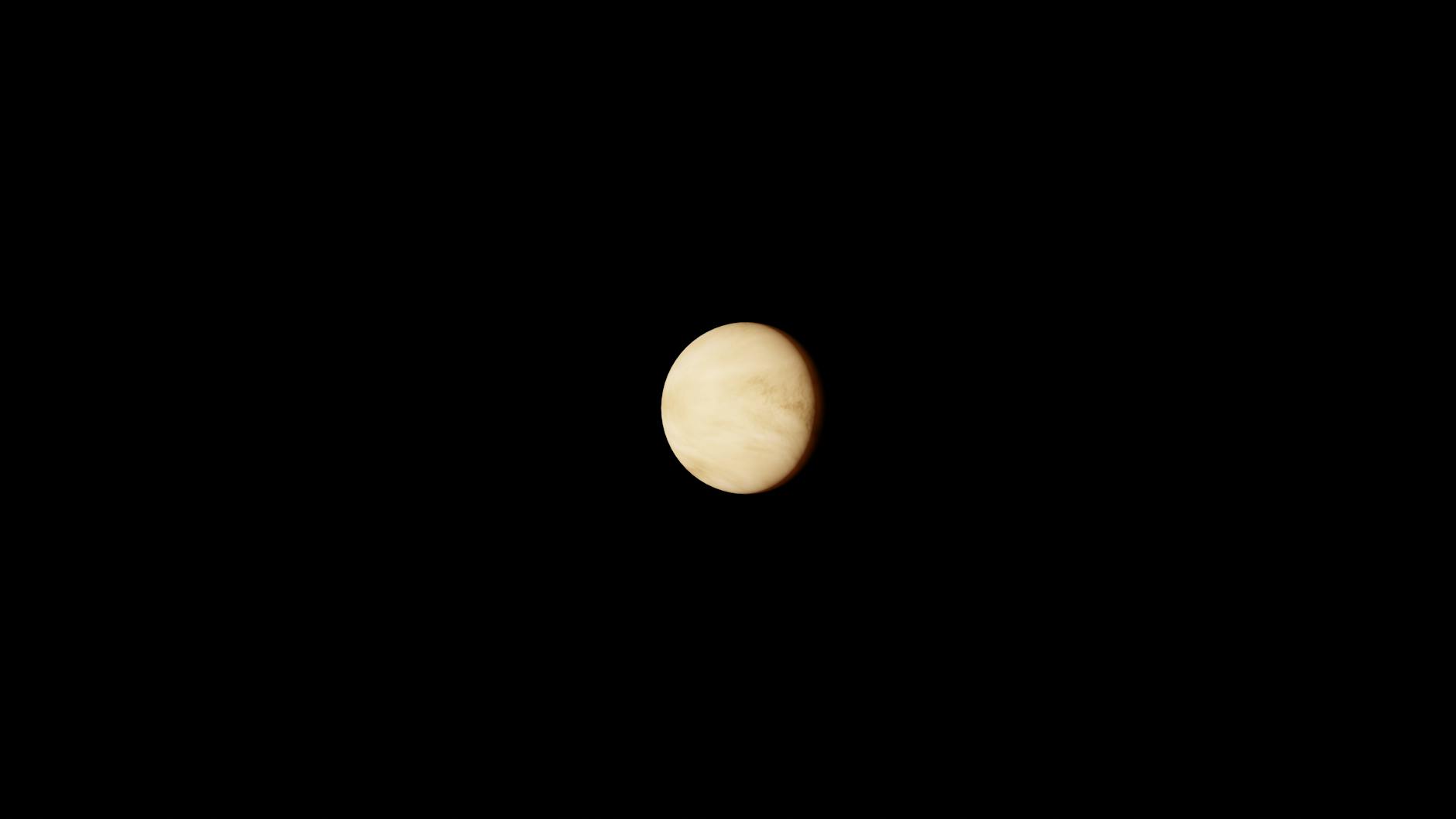
Imagine an object hurtling through space, millions of miles away, yet close enough to catch the attention of telescopes on Earth. In 2017, such an object, 1I/‘Oumuamua, emerged as a harbinger of interstellar secrets, marking the first time scientists confirmed the presence of an interstellar object passing through our solar system. This discovery opened a new chapter in understanding our universe and the potential secrets it carries. These cosmic travelers, like 3I/Atlas, not only fascinate astronomers but also challenge our scientific paradigms, pushing us to rethink what we know about the vastness of space.
The stakes are high. Unraveling the mysteries of these interstellar visitors could reshape our understanding of the cosmos, revealing insights about distant star systems and the materials they eject into the void. As we continue to detect these celestial wanderers, the potential for discovery grows exponentially, promising revelations that could redefine our place in the universe.
These encounters with interstellar objects invite profound questions about our connectivity with other star systems. Are these objects simply remnants of cosmic chaos, or do they hold clues to the origins of life itself? The journey to uncover their secrets is just beginning.
In this article: Discover how interstellar objects like 3I/Atlas challenge our understanding of the universe · Explore the implications of these cosmic visitors on our knowledge of star systems · Learn about the debates and discoveries they inspire · Understand the broader significance of these interstellar encounters
When Something Arrives From Outside
In 2017, astronomers detected something unusual moving through the inner solar system. It was traveling too fast to be gravitationally bound to the Sun, which could only mean one thing: it had come from somewhere else entirely, from another star system, passing through our neighborhood on a trajectory shaped entirely by the gravity of whatever it had passed through or been ejected from before reaching us. They named it 1I/‘Oumuamua — the first interstellar object ever confirmed.
An interstellar object is like a message in a bottle, carrying secrets from another world across the cosmic ocean.
Then, in 2019, came 2I/Borisov, a clearly cometary interstellar visitor with a visible coma and tail. And more recently, 3I/Atlas arrived with properties that have kept astrophysicists generating papers at an unusual rate. Each of these objects represents something extraordinary: physical matter from another star system, passing close enough that we can observe it with our instruments. The universe, in a very literal sense, has been sending us samples.
These discoveries are not just fascinating; they are paradigm-shifting. Astronomers like Dr. Michelle Bannister, who worked on 2I/Borisov, emphasize that these objects offer a rare opportunity to study material that formed around other stars, effectively giving us a glimpse into the building blocks of distant solar systems. The implications are profound, potentially informing both our understanding of how solar systems form and evolve and our search for extraterrestrial life.
What Makes an Object Interstellar
The key property that identifies an interstellar visitor is its trajectory and speed. Objects gravitationally bound to our solar system follow closed elliptical orbits. An object with a hyperbolic orbit — one that enters the solar system and then exits, never to return — has more than enough velocity to escape the Sun’s gravity. If that excess velocity is large enough, it indicates the object came from outside our system entirely.
Over 30,000 hyperbolic objects have been observed, but only a handful are confirmed as interstellar, demonstrating the rarity and significance of these events. (Source: Jet Propulsion Laboratory)
Calculating where these objects originated is possible in principle but difficult in practice. By running the trajectory backward through time and accounting for the gravitational influences of nearby stars, astronomers can estimate which stellar system an interstellar visitor might have come from. The results are probabilistic, not definitive — but they represent genuine astrophysical detective work, and the answer changes what the object means scientifically.
For instance, researchers have suggested that ‘Oumuamua might have originated from the Pleiades moving group, a cluster of young stars. This hypothesis underscores the complexity and interconnectedness of our galaxy. Understanding the origins of these objects not only helps trace their journey but also provides insights into the dynamics of their home systems and the processes that might lead to their ejection.
What 3I/Atlas Has Shown Us
According to research by Avi Loeb at Harvard and others, 3I/Atlas appears to have a mass of approximately one billion metric tons — a substantial object by solar system standards, though small on cosmic scales. Several properties have been described as anomalous: its trajectory, its brightness variations, its behavior during what should have been closest approach to the Sun.
The anomalies are what make it scientifically interesting. Objects that behave exactly as expected teach you what you already know. Objects that behave unexpectedly are the ones that force model revision.
The anomalies observed in 3I/Atlas have led scientists to speculate about its composition and origin. For example, its unexpected trajectory and brightness changes suggest that it might be composed of materials that react uniquely to the Sun’s heat, unlike any objects previously studied. These findings are particularly exciting because they challenge existing models of cometary behavior, prompting a reevaluation of the assumptions about the materials forming around distant stars.
Moreover, the study of 3I/Atlas could provide insight into how interstellar objects disintegrate or interact with solar radiation. This knowledge is crucial as it can enhance our understanding of the lifecycle of cosmic debris, offering clues about how similar objects might behave when they enter our solar system or even potentially collide with Earth.
What These Objects Reveal About Star Systems in General
The existence of interstellar objects — and the fact that we are now detecting them with some regularity as telescope technology improves — tells us something important about how common it is for material to be ejected from other solar systems.
- Planetary system formation is messy: Gravitational interactions during planetary formation regularly eject objects from their home systems. Our own solar system ejected enormous amounts of material during the era of planet migration.
- Interstellar space is not empty: Models suggest that interstellar space may be filled with enormous numbers of objects ranging from pebbles to ‘Oumuamua-sized bodies, traveling between star systems on timescales of millions to billions of years.
- Composition carries information: The chemistry of an interstellar visitor reflects the chemistry of the stellar system it came from — giving us indirect access to the composition of other planetary systems without ever leaving ours.
These insights are transforming our understanding of the galaxy as a dynamic and interconnected web of star systems. For example, scientists have discovered that the elements in interstellar asteroids can reveal the presence of water and organic compounds, hinting at the building blocks of life. This opens up exciting possibilities for the study of astrobiology and the potential for life beyond Earth.
Moreover, the detection of these objects is a testament to the advancements in telescope technology and data analysis methods, which have made it possible to identify and track such elusive visitors. As these technologies continue to improve, the rate of discovery is expected to increase, offering even more opportunities for groundbreaking scientific discoveries.
The Question Nobody Can Quite Let Go Of
‘Oumuamua generated a debate that has not entirely died down: a small minority of astrophysicists, including Loeb, argued that some of its properties were difficult to explain with natural models and raised the hypothesis — stated carefully as a hypothesis, not a conclusion — that it might be of artificial origin. The scientific community was largely skeptical, and subsequent natural explanations have been proposed for most of the anomalous properties.
The value of this episode is not the conclusion — which remains genuinely uncertain, though natural explanations are dominant — but the scientific discipline it demonstrated. The correct response to an anomaly is not to immediately invoke extraordinary explanations, nor to dismiss the anomaly as irrelevant. It is to describe it precisely, model the natural explanations rigorously, and remain honest about what the data does and does not constrain. Interstellar objects are forcing astrophysics to do exactly this kind of careful work.
Sometimes, the questions we can’t answer are just as important as the ones we can. The mystery keeps the scientific spirit alive and the search ongoing.
This ongoing debate highlights a fundamental aspect of scientific inquiry — the balance between skepticism and openness to new ideas. While the artificial origin of ‘Oumuamua remains a fringe theory, it has prompted researchers to look more closely at the potential technologies needed to detect and analyze such objects, preparing us for future discoveries that might challenge our understanding of the cosmos.
Why This Matters Beyond Astrophysics
There is something philosophically striking about the arrival of interstellar objects. For the first time in recorded history, we are in direct observational contact with material from other star systems — physical objects that have traveled for millions of years through the space between stars and arrived here, briefly, where we can see them.
The universe turns out to be considerably more interconnected than the image of isolated, self-contained solar systems would suggest. Star systems shed material into the interstellar medium. That material travels. Some of it eventually reaches other systems. The stars are not isolated — they are part of a vast, slow, gravitational ecology, and we have now begun, in a small way, to observe the evidence of it.
Tracking interstellar objects can enhance our understanding of cosmic evolution and the potential for life’s building blocks to traverse interstellar distances.
This broader perspective impacts not only astrophysics but also fields like philosophy, as it challenges us to reconsider humanity’s place in the universe. The realization that our solar system is not an isolated oasis but part of a complex interstellar network invites us to ponder the possibilities of communication and connection beyond our own star.
Frequently Asked Questions
What defines an interstellar object?
An interstellar object is identified primarily by its hyperbolic trajectory and speed, indicating it is not gravitationally bound to our solar system and likely originated from another star system.
Why are interstellar objects important for scientific research?
These objects provide a unique opportunity to study material from other star systems, offering insights into the formation and composition of distant solar systems and potential clues about the origins of life.
What are some of the challenges in studying interstellar objects?
The transient nature of these objects and the difficulty in tracing their origins pose significant challenges. Additionally, their unpredictable behavior can complicate model predictions.
Could interstellar objects support the hypothesis of extraterrestrial life?
While interstellar objects themselves are unlikely to harbor life, their compositions can contain organic compounds, suggesting that the building blocks of life may travel between star systems, supporting theories about life’s potential spread across the galaxy.
The Short Version
- Interstellar objects are rare cosmic travelers — originating from outside our solar system and challenging our understanding of the universe.
- ‘Oumuamua and 3I/Atlas are key examples — these objects have sparked significant scientific interest due to their unique properties.
- Trajectories and speeds define them — hyperbolic paths and high velocities indicate their interstellar origin.
- They reveal star system dynamics — offering insights into the formation and behavior of distant solar systems.
- Philosophical implications — these encounters prompt us to rethink humanity’s place in the cosmic network.
People Also Search For
interstellar objects discovery · ‘Oumuamua mystery · 3I/Atlas trajectory · interstellar comet 2I/Borisov · hyperbolic orbit definition · Avi Loeb extraterrestrial hypothesis · star system material ejection · interstellar travel potential · cosmic evolution insights · telescope technology advancements
Watch: Related Video
Sources
- Loeb, A. (2021). Extraterrestrial: The First Sign of Intelligent Life Beyond Earth. Houghton Mifflin Harcourt.
- Trilling, D. E., et al. (2017). Implications for planetary system formation from interstellar object 1I/2017 U1. The Astrophysical Journal Letters.
- Bannister, M. T., et al. (2019). The natural history of 2I/Borisov. Nature Astronomy.