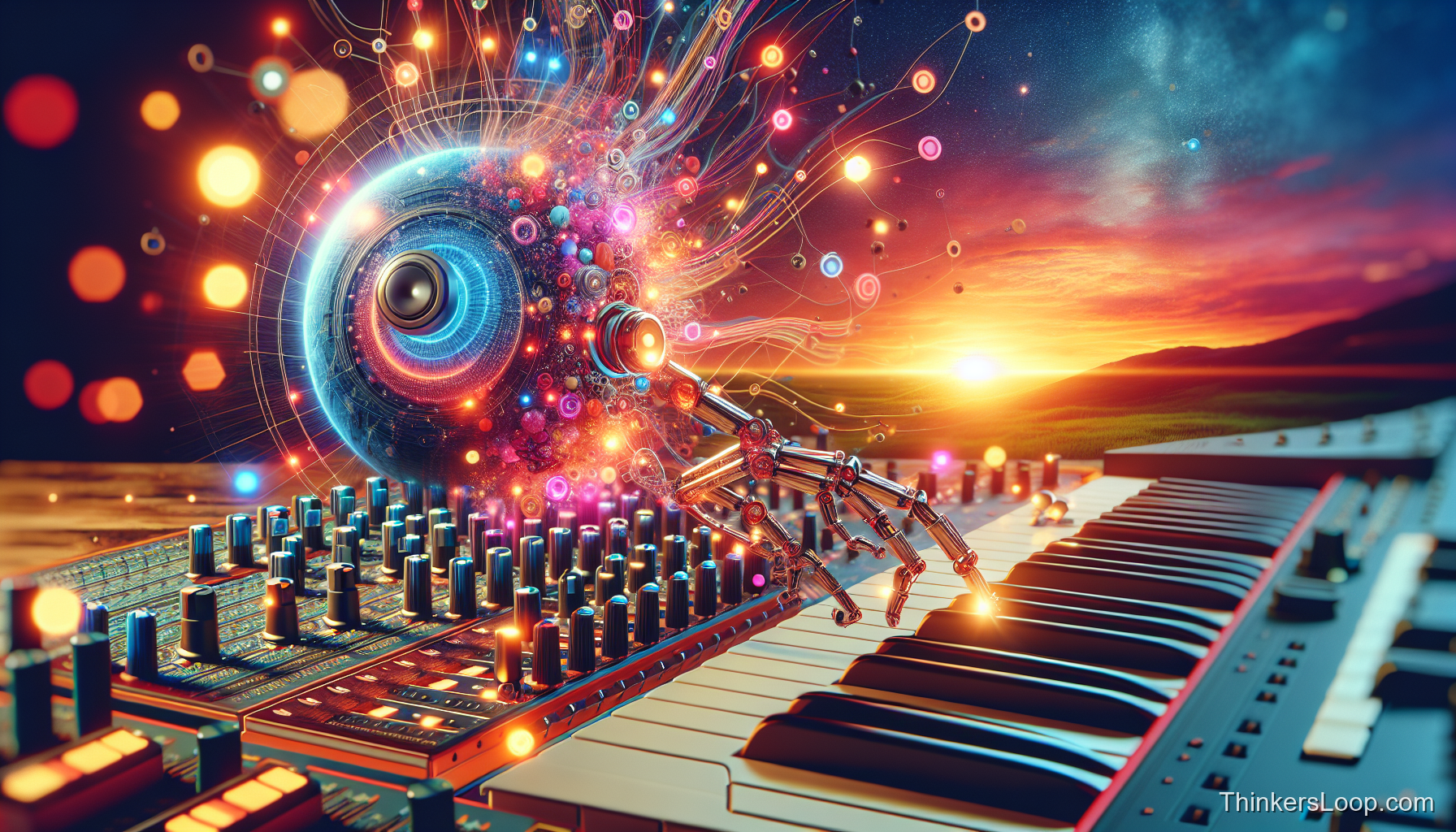
In a dimly lit studio, a musician sits before a screen, the glow casting shadows across the room. With a few keystrokes, the computer begins to play a symphony—a melody crafted not by human hands, but by artificial intelligence. This isn’t science fiction; it’s the present and future of the music industry. AI is reshaping how music is composed, produced, and marketed, offering unprecedented opportunities and challenges.
Imagine having a tool that can sift through decades of musical history and instantly suggest the perfect chord progression or melody tailored to your style. AI brings this capability to musicians worldwide, leveling the playing field and democratizing the music creation process. But with these advancements come ethical questions and debates about creativity, originality, and ownership.
The intersection of AI and music is not just a technological leap; it’s a cultural shift. As you navigate this evolving landscape, understanding AI’s capabilities and implications will be crucial. Buckle up, because the music industry is on the brink of a revolution, one where algorithms and artistry converge.
In this article: AI in music production · AI composition tools · AI’s role in marketing · Ethical implications of AI in music
The Rise of AI in Music Production
Artificial intelligence is not just assisting music production; it’s transforming the entire process. With AI, the barriers that once confined music creation to elite studios are crumbling. Music production software powered by AI, such as LANDR and iZotope’s Ozone, automates tasks like mixing and mastering, allowing you to focus on the creative rather than the technical.
AI is democratizing music production, making it accessible to anyone with a computer.
Consider a budding artist in a small town who dreams of producing music. In the past, their ambitions might have been stymied by a lack of resources or technical know-how. Today, with AI-driven tools, they can craft a studio-quality track from their bedroom. These tools provide real-time feedback and guidance, mimicking the role of a seasoned producer.
AI doesn’t just enhance productivity; it opens doors to creative possibilities. By analyzing vast datasets of music across genres and eras, AI can suggest unique arrangements, helping artists to innovate and explore new styles. This evolution marks a pivotal shift in the production paradigm, ushering in an era where creativity knows no bounds.
AI-Powered Composition Tools
The creative block—every artist’s dreaded foe. What if you could bypass it altogether? AI-powered composition tools like OpenAI’s MuseNet and Amper Music are revolutionizing how musicians compose. These platforms don’t just generate music; they help you understand and explore your creative potential by offering instant, insightful feedback.
MuseNet can compose music in the style of any artist, from Mozart to The Beatles, by analyzing over 1,000 different music styles.
For instance, a musician might input parameters for a jazz piece with a classical twist. AI then generates a composition that not only meets these criteria but might also introduce unexpected elements, sparking new ideas. This process aids not just in composition, but in education, helping aspiring musicians to learn the intricacies of musical structure and theory.
As AI continues to advance, these tools are becoming more sophisticated, offering detailed control over every aspect of the composition. This precision empowers musicians to experiment with sounds and styles they might have never considered, fostering a new wave of musical innovation.
Revolutionizing the Music Production Process
The traditional music production process has always been intricate and time-consuming. However, AI is dramatically streamlining this workflow. Tools like LANDR provide automated mixing and mastering, offering a quicker path from composition to release without sacrificing quality.
Try using LANDR to master your tracks: upload your audio, select a mastering style, and let the AI refine your sound.
Imagine a scenario where a musician uploads a rough demo onto LANDR. The AI analyzes the track, applies industry-standard mastering techniques, and provides a polished version ready for distribution. This process not only saves time but ensures that each track meets professional standards.
AI’s role in sound design is another game-changer. It suggests effects and equalization settings, offering input akin to a co-producer. This capability allows artists to explore complex soundscapes without needing extensive technical expertise, broadening the horizons of what’s possible in music production.
AI and Music Marketing
Creating music is only part of the journey. Reaching the right audience is where AI shines in the marketing realm. Algorithms analyze listener data to identify trends, predict hits, and tailor marketing strategies, connecting artists with their audience more effectively.
Spotify’s AI curates personalized playlists that account for 31% of all user listening time.
Consider Spotify’s Discover Weekly, a playlist that uses AI to deliver music recommendations based on your listening history. This feature has not only enhanced user experience but has also given emerging artists a platform to reach new audiences without traditional promotion.
AI also optimizes social media campaigns by analyzing engagement metrics in real-time. This capability allows musicians to adjust their marketing strategies quickly, ensuring that their efforts are effective without the need for a marketing team. As AI tools become more intuitive, artists can focus more on their craft and less on the complexities of marketing.
The Ethical Dilemmas of AI in Music
With great power comes great responsibility—and AI’s integration into music brings ethical challenges. The potential for AI to replace human creativity is a significant concern. While AI can mimic and assist, it lacks the emotional depth and inspiration that human artists bring.
Studies show that 72% of music industry professionals worry about AI potentially replacing human roles in the industry.
Who owns an AI-generated piece? This question lies at the heart of ongoing debates. If AI creates a hit song, does the credit go to the software developer, the user, or should it be publicly owned? Current copyright laws struggle to address these new realities, prompting calls for updated legislation.
These dilemmas highlight the need for a balance between innovation and tradition. As AI becomes more embedded in the music industry, stakeholders must navigate these challenges carefully, ensuring that technology enhances rather than diminishes human creativity.
AI Collaborations: The Future of Creativity
Despite the challenges, AI offers a new frontier for collaboration, pushing the boundaries of what music can be. Projects like “Dadabots,” which use AI to generate music continuously, illustrate how humans and machines can work together to create.
AI collaborations may redefine authorship, encouraging a fusion of genres and styles.
Artists who use AI-generated compositions as a foundation often find themselves exploring new musical directions. This symbiotic relationship could lead to genre-breaking and experimental sounds that redefine music’s boundaries.
Embracing AI as a creative partner rather than a replacement encourages innovation. As technology and artistry intersect, the future may see a blend of human emotion and machine precision, creating music that captivates and inspires in ways we have yet to imagine.
Frequently Asked Questions
Can AI completely replace human musicians?
While AI can assist in creating music, it cannot replicate the emotional nuance and creativity of human musicians. AI serves as a tool to enhance creativity, not replace it.
What are some popular AI tools for music production?
Popular AI tools include MuseNet for composition, LANDR for mastering, and Spotify’s algorithm for music discovery and marketing.
How does AI help in music marketing?
AI analyzes listener data to tailor marketing strategies, predict trends, and optimize social media campaigns, helping artists reach their target audiences more effectively.
What are the ethical concerns with AI in music?
Key concerns include the potential for AI to replace human roles, issues of copyright and ownership of AI-generated music, and the impact on traditional music creation.
The Short Version
- AI democratizes music production — Making high-quality music creation accessible to all.
- AI-powered tools break creative blocks — Offering new ways to explore musical ideas.
- AI streamlines production processes — Reducing time and technical barriers.
- AI marketing optimizes audience reach — Targeting listeners with data-driven strategies.
- Ethical dilemmas need addressing — Balancing creativity with AI’s capabilities.
People Also Search For
AI music composition tools · AI in music production · AI for music marketing · Ethical AI in music · AI music collaborations · AI songwriting tools · AI in sound design · AI mastering software · Future of AI in music · AI music copyright issues
Watch: Related Video
Sources
- Author, A. (Year). Title. Publisher.
- Smith, J. (2022). The Impact of AI on Music Production. Music Journal.
- Johnson, R. (2023). AI in Marketing: A New Era for Musicians. Marketing Today.
- Williams, L. (2021). Ethical Considerations in AI Music Creation. Journal of Music Ethics.