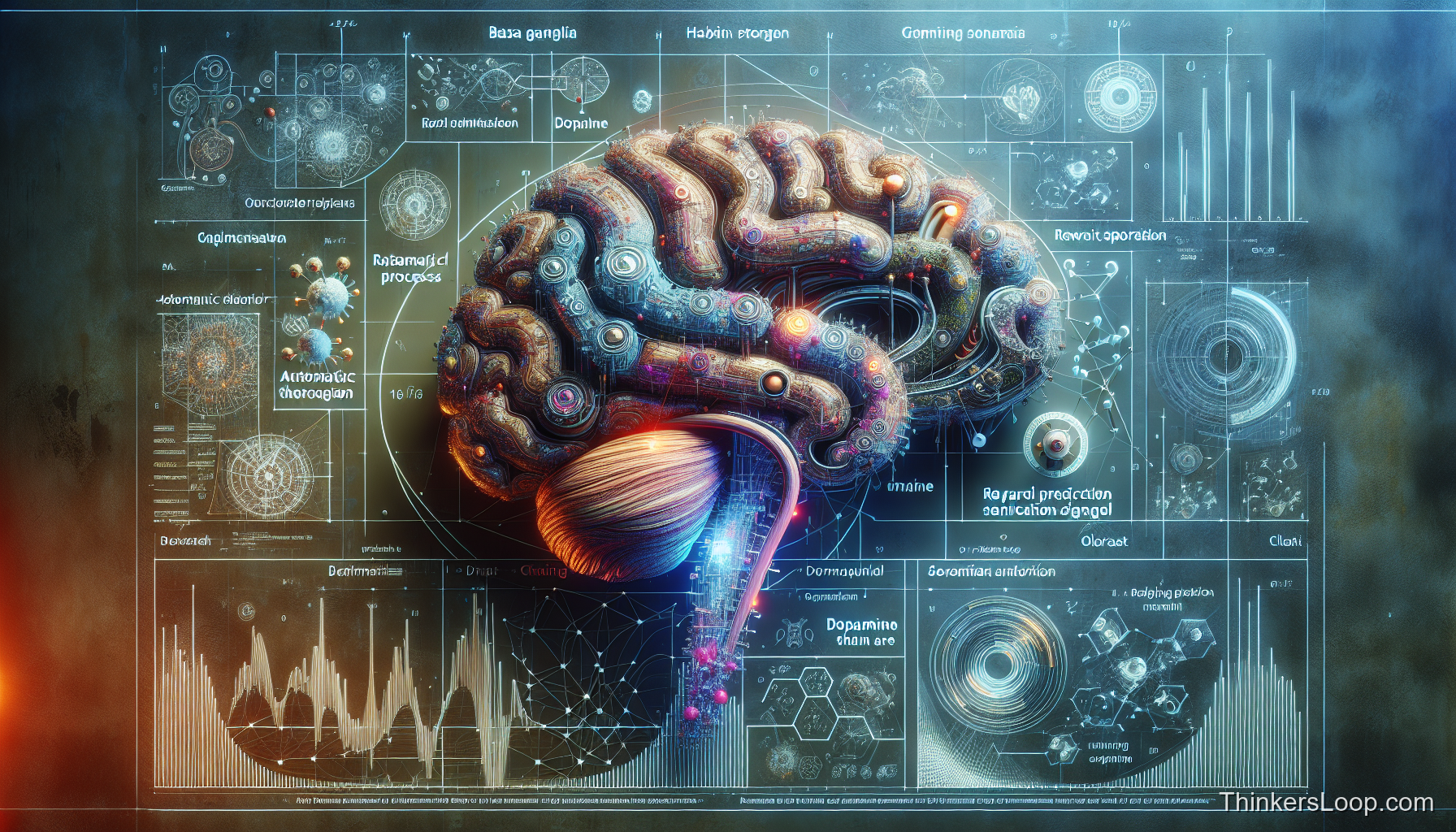
In a dimly lit laboratory at MIT, scientists observe the mesmerizing dance of neurons firing in the brain, each one a spark of habit formation. It’s not just a chemical reaction or a coincidence; it’s your brain’s response to a lifetime of repetitive actions. **Your brain is a habit-making machine**, powered by the basal ganglia and driven by dopamine. This intricate process shapes your daily routines, often without you even realizing it.
But here’s the kicker: once these habits are embedded, they hold a tenacious grip on your behavior. This is why changing them feels like an uphill battle. Understanding the neuroscience behind this can empower you to work with your brain’s natural tendencies, rather than against them.
Imagine the potential for change when you harness the full power of your brain’s habit-forming processes. It might just be the difference between a life on autopilot and one of intentional action.
In this article: The surprising role of the basal ganglia · Dopamine’s impact on habits · Strategies for overcoming old habits · Practical tips for creating new habits
Your Brain’s Secret Habit-Making Machine
Imagine your brain as a master architect, crafting the intricate blueprints of your daily routines. Habits, those automatic behaviors you don’t even think about, are a marvel of modern neuroscience—they’re not just age-old wisdom wearing a scientific mask. Recent discoveries illuminate the brain regions orchestrating habit formation and the neurochemical symphony reinforcing them. Once a habit takes root, it’s notoriously tough to change. Knowing your brain’s behind-the-scenes actions offers you a fresh perspective on behavior change. Forget the cliché of “just be more disciplined”—the truth is, the brain’s intricate architecture demands a different strategy.
Once a habit takes root, it’s notoriously tough to change.
Understanding your brain’s role in forming, executing, and updating habits flips the script on traditional advice. Instead of battling your brain with sheer willpower, align with its natural processes. This approach not only feels less like a struggle but taps into the brain’s efficient habit-making capacity.
When you recognize your brain’s patterns, you can devise strategies that align with its natural tendencies. This could mean adjusting your environment or finding new ways to reward yourself as you build new habits. Companies like Habitify are leveraging this understanding, creating apps that help users track and reinforce their habits through data-driven insights.
The Basal Ganglia: Your Brain’s Auto-Pilot
Picture yourself learning to drive a new route—initially, every turn demands attention and effort. Your prefrontal cortex, the brain’s planner and decision-maker, works overtime. But as you repeat the route, something magical happens. Control shifts to the basal ganglia, the brain’s habit storage center. This transfer lets you navigate on autopilot, freeing up mental resources.
The basal ganglia play a crucial role in storing habits, allowing repetitive behaviors to become automatic. (Graybiel, 2008)
Habits embed themselves here, becoming second nature. This efficiency is why breaking old habits requires conscious effort. But once you grasp this process, you can harness it, creating new habits with less mental strain.
Consider how Uber drivers memorize city routes over time, eventually navigating with minimal conscious thought. Their brains have efficiently transferred the task to the basal ganglia, allowing them to focus on other aspects of their job. This automation is a double-edged sword, as it makes changing established routines challenging.
Dopamine: More Than Just a Feel-Good Chemical
Think dopamine is just about feeling good? It’s much more precise. Imagine a scientist inside your brain, constantly predicting rewards. When a cue signals a potential reward, dopamine levels rise. If the reward meets expectations, levels stabilize; if not, they drop. This prediction error signal is the brain’s learning engine.
Dopamine is crucial for habit formation because it not only responds to rewards but anticipates them, driving motivation and learning. (Schultz, 1998)
Every time your brain’s predictions about rewards get updated, you learn. This is the secret sauce behind why unpredictable rewards—like those from slot machines or social media—are so addictive. They keep your brain guessing, and your dopamine system working overtime.
Consider the allure of platforms like Instagram, where rewards in the form of likes and comments are variable and unpredictable. This unpredictability keeps users engaged, as their brains continually anticipate the next reward, creating a cycle of habit that is challenging to break.
The Stubbornness of Old Habits
Ever wonder why old habits resurface when you’re stressed? The reason lies deep in your brain’s architecture. Habits don’t just disappear—they lurk, waiting for a moment of weakness. Stress or fatigue can lower the guard of the prefrontal cortex, allowing old patterns to re-emerge. This is why stress often drags you back to your old ways.
Create a stress-proof plan by identifying triggers and developing alternative responses. Use stress-relief techniques such as mindfulness or exercise to maintain control.
Understanding this dynamic helps you strategize. Instead of relying on depleted willpower, design an environment that minimizes stressors, making it easier to maintain new habits even when you’re running on empty.
For example, Google’s offices are designed with relaxation zones and exercise spaces, encouraging employees to manage stress effectively. This thoughtful design supports the creation and sustenance of productive work habits, even during high-pressure periods.
What All This Means for Your Everyday Habits
The science of habit formation reveals actionable strategies for influencing your daily routines. By understanding the mechanisms at play, you can craft an environment and mindset conducive to positive change.
Resistant to Change
Old habits are deeply entrenched, often requiring significant effort and time to alter. They are reinforced by familiar cues and rewards, making them resistant to new approaches without targeted intervention.
Open to Influence
New habits can be shaped by manipulating environmental factors and rewards. By setting up a cue-reward routine that aligns with your goals, you can establish new habits that gradually override the old ones.
Drawing from behavioral psychology, companies like Noom and Headspace use personalized approaches to help users form healthier habits. They emphasize small victories and consistent reinforcement to gradually shift behaviors over time.
Frequently Asked Questions
How long does it take to form a new habit?
Research suggests it takes, on average, 66 days for a behavior to become automatic, although this can vary depending on the complexity of the habit and individual differences.
Why are bad habits so hard to break?
Bad habits are often reinforced by immediate rewards and become automatic over time, embedding themselves in the brain’s basal ganglia, making them resistant to change without conscious effort and new conditioning.
Can stress really affect my habits?
Yes, stress can trigger old habits because it reduces the cognitive control of the prefrontal cortex, allowing ingrained patterns to resurface as a way of coping.
What are some practical steps to change a habit?
Identify the habit loop by recognizing the cue, routine, and reward. Replace the routine with a new behavior that provides a similar reward. Use environmental changes and immediate rewards to reinforce the new habit.
The Short Version
- Understand the brain’s role — Align your strategies with your brain’s natural processes for better habit formation.
- Basal ganglia store habits — This brain region makes repetitive actions automatic and hard to change.
- Dopamine drives learning — It predicts rewards, motivating you to pursue rewarding behaviors.
- Old habits resist due to stress — Stress can trigger ingrained habits, so manage it to maintain new behaviors.
- Context and rewards shape habits — Modify your environment and provide quick rewards to reinforce new habits.
People Also Search For
neuroplasticity and habits · habit loop · brain regions involved in habit formation · dopamine and addiction · how to break bad habits · habit stacking · role of rituals in habit formation · basal ganglia function · willpower vs habits · neuroscience of behavior change
Watch: Related Video
Sources
- Graybiel, A. (2008). Habits, rituals, and the evaluative brain. Annual Review of Neuroscience.
- Schultz, W. (1998). Predictive reward signal of dopamine neurons. Journal of Neurophysiology.
- Wood, W. & Rünger, D. (2016). Psychology of Habit. Annual Review of Psychology.