
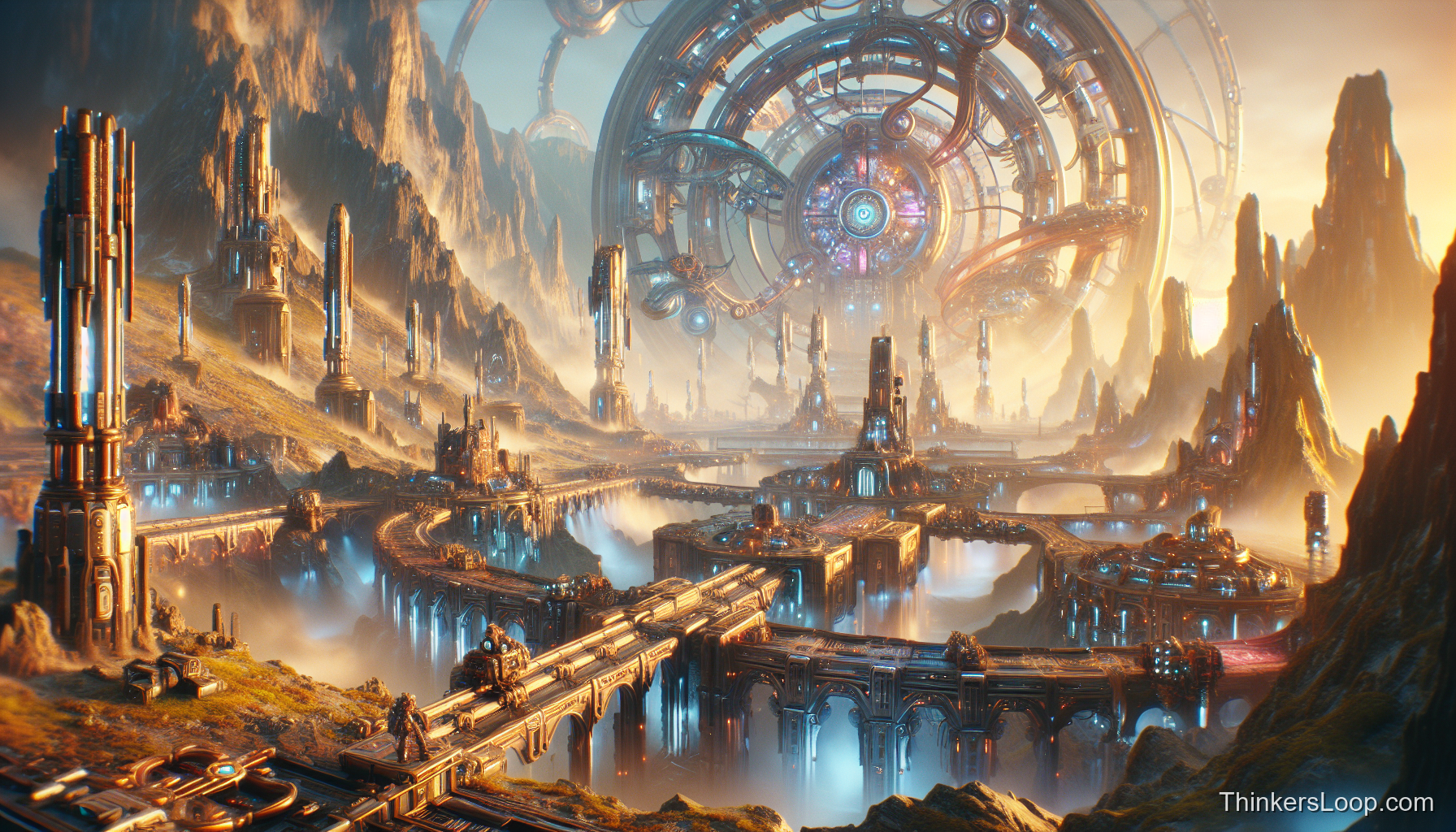
Quick take: Warhammer 40,000 is not just a tabletop game — it is one of the most expansive fictional universes ever created, spanning miniature wargaming, video games, novels, audio dramas, and a community that has sustained intense engagement for nearly four decades. Its longevity reveals something about how rich creative universes build lasting attachment.
In any hobby shop that carries it, Warhammer 40,000 occupies an outsized physical and cultural footprint. The miniatures are expensive, requiring assembly and hand-painting. The rulebook is dense. The lore spans decades of novels, codices, and supplements totaling tens of millions of words. It should, by any rational analysis, have a tiny niche audience. Instead, it has generated over three billion dollars in annual revenue, inspired hundreds of video games, produced some of the best-selling science fiction novels in UK publishing history, and created communities that span generations.
Understanding how this happened is a story about creative world-building, community investment, and the particular kind of loyalty that comes from spending months painting a miniature army.
The Grimdark Universe: A Setting Unlike Any Other
Warhammer 40,000 was created in 1987 by Games Workshop as a science-fantasy tabletop wargame set in a deliberately excessive and dark far future. Its tagline — “In the grim darkness of the far future, there is only war” — is not hyperbole. The setting features humanity as a theocratic empire of a trillion people, slowly losing a multi-front war against alien races, chaos gods, and its own corruption. There are no good factions. The nominal heroes — the Space Marines — are genetically modified super-soldiers serving an undying God-Emperor who has been a mindless corpse for ten thousand years and whose empire operates through fanaticism, slavery, and genocide.
This maximalist darkness was initially a satirical critique of fascism and religious extremism, wearing its influences (2000 AD comics, Dune, Alien, heavy metal album art) proudly. Over time, the satire became serious mythology — an increasingly elaborated universe with coherent internal logic, thousands of named characters, civilizations with deep histories, and philosophical tensions between different visions of survival in an impossible universe. The grimdark aesthetic proved to be not a barrier to engagement but a feature: the setting offered something no other science fiction universe did, a canvas for tragedy and moral complexity on an apocalyptic scale.
The term “grimdark” — now widely used to describe a subgenre of fantasy and science fiction characterized by dark, cynical, and morally ambiguous settings — derives directly from the Warhammer 40,000 tagline. A hobby game coined a genre descriptor now applied to mainstream literary fiction.
Why Painting Miniatures Creates Extraordinary Engagement
The miniature wargaming experience is unlike any other hobby. Players purchase unpainted plastic or resin kits, assemble them, and paint them to a standard they choose — ranging from functional tabletop quality to award-winning display pieces requiring hundreds of hours and genuine artistic skill. The investment is considerable: a competitive army costs hundreds to thousands of dollars in models alone, and the painting time is similarly substantial.
This investment creates a distinctive psychological relationship with the hobby. Hours spent painting a model create a form of ownership and attachment that no digital purchase can replicate. Players develop genuine artistic skills over time. The visible progress from raw kit to finished army provides a satisfaction arc that spans months. And the models on the table represent not just pieces in a game but a creative and financial investment that makes every game emotionally meaningful in a way that loses its resonance when you explain it to someone who hasn’t experienced it.
Games Workshop’s financial performance reflects this deep engagement: the company generates over £450 million in annual revenue with a profit margin that rivals premium technology companies. It achieved this selling physical products requiring hours of assembly and painting, in a market otherwise dominated by digital entertainment. The company’s success is largely attributed to building a deeply engaged community rather than chasing casual audience scale.
Why People Start
Attracted by the striking visual aesthetic of painted miniatures. Intrigued by the depth of the fictional universe. Invited by a friend who plays. Interested in tabletop strategy gaming. The Amazon Prime series, video games like Space Marine 2, or the Horus Heresy novel series serve as entry points from non-miniature directions.
Why People Stay
The creative investment of painting creates ownership and pride. The social dimension of the community is strong and welcoming to new painters. The universe is deep enough to sustain years of lore exploration. Skill improvement is visible and satisfying. The tactile physical nature of the hobby provides something digital entertainment cannot.
From Tabletop to Media Empire
Warhammer 40,000’s expansion beyond tabletop gaming accelerated dramatically in the 2010s and 2020s. The Black Library (Games Workshop’s publishing imprint) produces dozens of novels annually in the Warhammer universe, with authors like Dan Abnett achieving genuine mainstream literary recognition within science fiction. The Horus Heresy series — a multi-year, multi-author saga of 54 novels covering the universe’s defining cataclysm — became one of the most ambitious collaborative fiction projects in genre publishing history.
Video games have been equally prolific, ranging from the celebrated Dawn of War real-time strategy series to the recent Space Marine 2, which sold over four million copies in its launch period and introduced the franchise to a new generation who may never have heard of the tabletop game. The Amazon Prime adaptation has brought the universe to audiences who have no prior knowledge of wargaming, creating new entry points through narrative media rather than physical hobbyist investment.
“Warhammer 40,000 succeeded not despite its impenetrability but partly because of it. A universe deep enough to spend years exploring gives fans something to be custodians of, not just consumers of.”
The Community as the Product
Games Workshop has been unusually successful at building community around the hobby rather than just around specific products. Local gaming stores serve as social hubs. Painting competitions and events create community gathering points. The Games Workshop social media presence celebrates hobbyists’ painted models rather than just promotional content. This community investment creates a network of relationships — between players, between players and local stores, between the community and the parent company — that is self-sustaining in ways that purely commercial relationships are not.
The fan community has also developed into a creative ecosystem in its own right. Fan fiction, fan art, community-run painting tutorials, “lore channels” on YouTube with millions of subscribers — a complete media ecosystem has grown around the universe that is not controlled by Games Workshop but that maintains and extends the community. This fan creativity is one of the clearest signs that a universe has achieved genuine cultural depth: when fans invest their own creative work in extending it without compensation.
If you’re curious about Warhammer 40,000 but intimidated by the miniature hobby, the best entry point is the novel series. Dan Abnett’s Gaunt’s Ghosts series (starting with “First and Only”) is military science fiction that happens to be set in the universe — accessible to anyone who enjoys the genre regardless of tabletop experience. Video games like Space Marine 2 offer another low-commitment entry point.
What Makes Fictional Universes This Enduring
Warhammer 40,000’s longevity is partly explicable by its creative depth and partly by the economics of the miniature hobby (high switching costs — your collection doesn’t transfer to another game). But there is something else at work: the universe gives its fans something to be custodians of rather than just consumers of. The depth of the lore means fans can know things about it that others don’t. The painting hobby means fans can contribute visually to the universe’s presentation. The community means fans belong to something that has a history and relationships.
This combination — depth sufficient to reward investment, a creative participation dimension, and community belonging — is the template for every deeply enduring fan community, from Tolkien’s Middle-earth to Star Wars to Dungeons & Dragons. Warhammer 40,000 has built all three of these in particularly robust form, which is why a tabletop game created in 1987 with deliberately absurdist aesthetic choices continues to grow its audience nearly four decades later.
The cost of entry to Warhammer 40,000 as a miniature hobby is substantial. A starter army for competitive play typically costs $200-400 in models before painting. This financial barrier is a genuine accessibility issue. However, the video game and novel entry points provide ways to engage with the universe at significantly lower cost.
The Short Version
- Warhammer 40,000’s grimdark setting — deliberately dark, satirical of fascism, and maximally elaborate — proved to be a feature, not a barrier, providing a unique creative canvas.
- The miniature painting hobby creates investment and ownership that generates extraordinary community loyalty and retention.
- The universe has expanded to novels, video games, and streaming, each creating new entry points that feed back into the core hobby community.
- The fan community has built a creative ecosystem of its own — a sign of genuine cultural depth, not just commercial success.
- The enduring formula: enough depth to reward investment, a creative participation dimension, and community belonging strong enough to span decades.
Frequently Asked Questions
No. The video games (Space Marine 2, Dawn of War, Total War: Warhammer) and the novel series (Black Library books, particularly the Horus Heresy saga) provide full access to the universe without any miniature purchase. The tabletop game is one expression of the universe, not the only entry point. Many fans engage primarily or exclusively through novels or video games.
Because it has been built by hundreds of writers, designers, and game developers over nearly 40 years, with each addition adding depth and occasionally contradicting earlier material. The universe has no single authoritative “canon” — Games Workshop’s official position is that the in-universe scribes who write history are unreliable, which conveniently makes all contradictions part of the fiction. This deliberate flexibility allows the universe to grow without rigid continuity constraints.
The Imperium of Man — the nominal human faction — is deliberately designed as a critique of fascism, religious extremism, and ultranationalism taken to their logical conclusions. The setting is not endorsing the Imperium’s values but examining them satirically. Many fans engage with the universe specifically because it provides a canvas for thinking about these themes at a safe remove. However, as with any dark fictional universe, it also attracts some fans who misread the satire as celebration.
Starter sets begin at $50-80 for a small sample of models. A functional army for casual play typically costs $150-300. A competitive list runs $300-600+. Costs are ongoing as new units are released and game editions update requirements. Games Workshop’s premium pricing is a persistent community discussion point; the second-hand market provides alternative access at lower prices.
Warhammer 40000 explained for beginners, why Warhammer is so popular, grimdark explained, Warhammer 40k lore overview, Games Workshop revenue model, Warhammer Space Marine game, how to start Warhammer, Warhammer vs other tabletop games