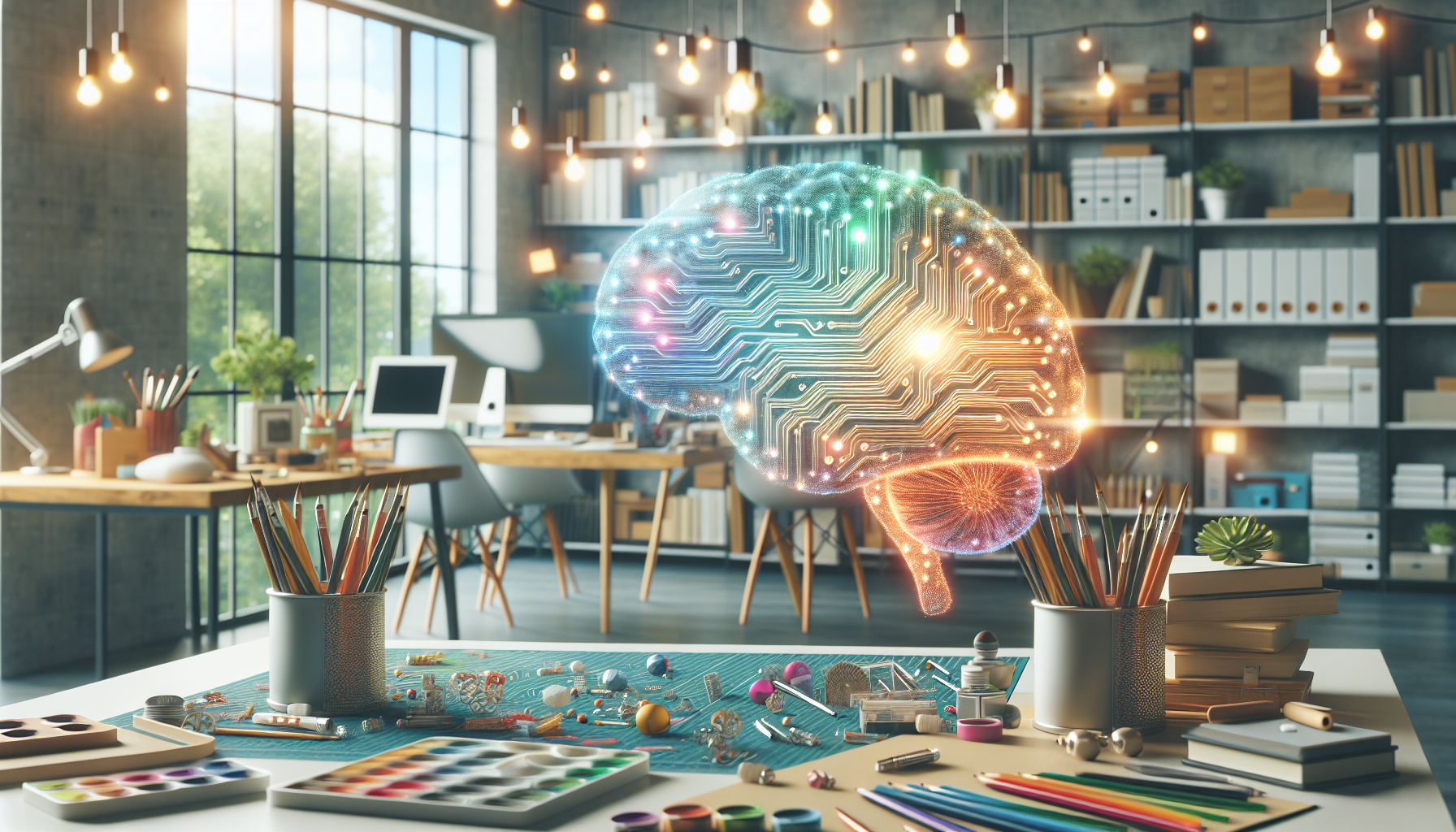
Picture this: a bustling design studio where the hum of creativity meets the whir of cutting-edge technology. In one corner, a graphic designer collaborates with an AI-powered assistant to create stunning visuals in minutes. Across the room, a writer uses AI to overcome writer’s block, generating ideas at lightning speed. This is not a scene from a sci-fi movie; it’s the reality of today’s creative industries.
The rise of artificial intelligence is transforming how we think about creativity. It’s no longer confined to the human brain; AI is emerging as a powerful ally capable of enhancing the creative process in unprecedented ways. But what does this mean for you as a creative professional? The stakes are high: adapt and thrive, or resist and risk obsolescence.
In the following sections, we’ll explore the multifaceted impact of AI on creative professions, unveiling strategies to harness its potential and navigate the ethical complexities it brings.
In this article: AI as a Creative Partner · The Democratization of Creativity · Job Displacement Myths · Ethical Challenges and Solutions
AI as a Creative Partner
Consider sitting at your computer, ideas flowing freely as your AI assistant suggests the perfect complement to your latest project. This scenario is rapidly becoming a reality. Sophisticated AI tools are no longer just for data crunching; they are creative partners that can brainstorm, inspire, and even compose. Platforms like OpenAI’s ChatGPT offer new ways for writers to generate content ideas and solve creative blocks, while AI-driven design platforms transform simple prompts into complex visuals.
AI is not a threat to creativity; it’s a catalyst for innovation.
Take, for example, Grammy Award-winning music producer Alex Da Kid, who used IBM’s Watson to analyze 26 years of Billboard music, news, and social media data. The insights guided him to create a hit song that topped charts. This partnership exemplifies the potential of AI to expand human creativity rather than replace it.
By embracing AI as a collaborator, you can enhance your creative capabilities. Whether breaking through a mental block or exploring new styles, the synergy between human intuition and AI precision is driving a new era of artistic expression.
The Democratization of Creativity
AI is leveling the playing field in creative industries by making sophisticated tools accessible to everyone. This democratization means that you no longer need expensive software or years of training to produce professional-quality work. AI platforms like DALL-E empower users to create intricate visuals with just a text prompt, opening up new possibilities for those without formal training.
A report by Adobe found that 47% of creatives believe AI enhances their creative potential, while 71% think it will bring new opportunities.
Consider the impact on education. Students can now access tools that allow them to express their ideas more vividly, fostering a more inclusive and diverse creative landscape. For small businesses and entrepreneurs, AI reduces the cost of entry, allowing them to compete with more established players by producing high-quality content with limited resources.
The result is a richer cultural tapestry, where voices that might have been marginalized can now contribute and thrive. This shift not only diversifies the creative dialogue but also encourages innovation and the exchange of ideas across different backgrounds and experiences.
Job Displacement: Myth vs. Reality
The fear of AI replacing human jobs is widespread, but the reality is more nuanced. While AI can automate certain tasks, it also creates opportunities for new roles that blend human creativity with technological proficiency. The World Economic Forum predicts that while AI might displace some jobs, it will also create millions of new positions focused on creativity and tech-savviness.
AI doesn’t eliminate jobs; it transforms them, emphasizing adaptability and lifelong learning.
For instance, consider the role of an “AI creative director,” a position that focuses on guiding AI tools to achieve specific creative goals. This role requires a deep understanding of both artistic vision and AI capabilities, showcasing how job descriptions are evolving rather than disappearing.
The key for creative professionals lies in developing complementary skills such as emotional intelligence, strategic thinking, and storytelling. These uniquely human attributes will remain in high demand, as they are the perfect complement to AI’s analytical strengths.
Ethical Challenges and Solutions
As AI becomes more entrenched in creative workflows, ethical considerations loom large. Who owns the rights to AI-generated content? Can AI unintentionally reinforce biases? These questions are crucial and require thoughtful solutions to ensure fair and equitable creative practices.
Address these challenges by engaging in active discussions with stakeholders and developing clear guidelines for AI use in creativity.
For example, the music industry has begun to tackle these issues through initiatives like the “Human Artistry Campaign,” which aims to establish ethical frameworks for AI-generated music. This proactive approach ensures that AI serves as a tool for enhancing human creativity without compromising the authenticity and diversity of artistic expression.
As a creative professional, you have a role in shaping these discussions, advocating for ethical standards, and ensuring that AI amplifies rather than diminishes the richness of human creativity.
Embracing the Future of Creativity
In a world where AI and creativity intersect, the future belongs to those who are willing to adapt and experiment. By embracing AI, you don’t relinquish control; you gain new tools for innovation. The challenge is to remain open-minded, continually refine your skills, and integrate AI into your process to push the boundaries of what’s possible.
Participate in AI-focused workshops, engage with online forums, and experiment with new tools. By doing so, you will be better equipped to leverage AI’s capabilities, enhancing your own creative output and redefining the possibilities of artistic expression.
This is an exciting era for creative professionals, where the fusion of AI and human ingenuity can lead to groundbreaking work. The journey involves not just understanding AI but actively participating in its evolution to ensure that creativity remains at the heart of technological advancement.
Frequently Asked Questions
Can AI fully replace human creativity?
While AI can assist and enhance creative processes, it lacks the emotional depth and personal experience that define human creativity. AI is a tool that complements human ingenuity rather than replacing it.
What skills should I focus on to remain relevant?
Focus on developing skills that AI cannot replicate, such as emotional intelligence, strategic thinking, and advanced storytelling. These abilities will ensure you remain valuable in an AI-enhanced creative landscape.
How can I integrate AI into my creative workflow?
Start by exploring AI tools relevant to your field. Platforms like Canva, Adobe Sensei, and AIVA offer features that can enhance your work. Experiment with these tools to discover how they can complement your creative process.
What are the ethical concerns associated with AI in creativity?
Key concerns include copyright issues, authorship disputes, and potential biases in AI-generated content. Engaging in industry discussions and advocating for clear guidelines can help address these challenges effectively.
The Short Version
- AI as a Creative Partner — AI enhances and expands creative potential.
- Democratization — AI makes creative tools accessible to all.
- Job Evolution — AI transforms roles, creating new opportunities.
- Ethical Challenges — Addressing rights, bias, and authorship is crucial.
- Future of Creativity — Embrace AI to innovate and redefine art.
People Also Search For
AI in art · AI creative tools · AI and job displacement · AI ethics in creativity · AI writing assistants · AI in music production · AI design software · Creative AI applications · AI innovation in art · AI and human creativity
Sources
- World Economic Forum. (2020). The Future of Jobs Report 2020. World Economic Forum.
- OpenAI. (2021). DALL-E: Creating Images from Text. OpenAI.
- Adobe. (2021). Adobe Sensei: AI and Machine Learning. Adobe Systems.